Wednesday, 26 July 2023

Powering Up for BJJ Competition: The Most Beneficial Weight Training Regimen

 Brazilian Jiu-Jitsu (BJJ) competitions demand a combination of technical finesse, agility, endurance, and strength. To excel in the competitive arena, BJJ practitioners must complement their mat training with a well-rounded weight training regimen. However, not all weight training approaches are equally beneficial for BJJ. In this article, we'll explore the most effective weight training exercises and principles that can enhance your performance in BJJ competitions.

1. Compound Exercises: Building Functional Strength

Compound exercises, which involve multiple muscle groups and joints working together, should form the foundation of your weight training program. These movements mimic the integrated nature of BJJ techniques, enhancing your functional strength and overall athleticism.

Key Compound Exercises for BJJ:

a. Deadlifts: Strengthening your posterior chain (lower back, glutes, and hamstrings) is crucial for generating power during takedowns and guard passes.

b. Squats: Enhance leg strength and stability to improve guard retention and explosive movements.

c. Bench Press: Develop upper body strength, essential for controlling your opponent and maintaining dominant positions.

d. Pull-Ups/Chin-Ups: Strengthen the muscles of the back and arms, vital for gripping and controlling your opponent.

2. Explosive Movements: Improving Speed and Power

BJJ competitions often require quick bursts of explosive energy. Incorporate explosive movements into your weight training routine to improve your ability to explode into takedowns, sweeps, and submissions.

Key Explosive Exercises for BJJ:

a. Medicine Ball Throws: Improve upper body explosiveness, mimicking movements like the hip bump sweep.

b. Box Jumps: Enhance lower body power for quick guard passes and scrambles.

c. Kettlebell Swings: Develop hip power, useful for explosive bridging and hip escapes.

3. Core Stability: Enhancing Balance and Control

A strong core is vital for maintaining balance and stability in BJJ. Incorporate exercises that challenge your core muscles in various planes of movement.

Key Core Exercises for BJJ:

a. Planks (with variations): Strengthen the core and improve your ability to brace during takedowns and escapes.

b. Russian Twists: Enhance rotational core strength, critical for many BJJ techniques.

4. Grip Strength: Dominating Your Opponent

In BJJ, grip strength is a game-changer, influencing your ability to control and submit your opponent. Include grip-specific exercises in your weight training routine to develop a vice-like grip.

Key Grip Strengthening Exercises for BJJ:

a. Farmers Walk: Improve overall grip strength and endurance.

b. Towel Pull-Ups: Challenge your grip by performing pull-ups with towels instead of a bar.

5. Injury Prevention: Strengthening Supportive Muscles

BJJ places repetitive stress on certain muscle groups. To prevent injuries, incorporate exercises that strengthen supportive muscles, such as the rotator cuffs, hips, and knees.

Conclusion: A Comprehensive Approach

To excel in BJJ competitions, a well-rounded weight training program is essential. Emphasize compound exercises for functional strength, explosive movements for speed and power, core stability exercises for balance, and grip strengthening exercises for better control. Additionally, focus on injury prevention by strengthening supportive muscles.

Remember that while weight training is essential, it should complement—not replace—your BJJ training. Always prioritize recovery and ensure that your weight training does not hinder your mat performance. By adopting a comprehensive and tailored weight training regimen, you can boost your BJJ performance and step confidently onto the competition mat.

Accelerating Progress Towards the Blue Belt: Leveraging Seminars, Private Lessons, and Training Logs

 Attaining the blue belt in Brazilian Jiu-Jitsu (BJJ) within a year is a commendable goal that requires dedication and strategic training. While consistent training forms the bedrock of progress, integrating additional learning opportunities such as seminars and private lessons, along with maintaining a training log, can significantly enhance your journey towards the coveted blue belt. In this article, we will explore how these practices can accelerate your progress and keep you motivated on your BJJ path.

1. Seminars: Immersion in Expert Knowledge

BJJ seminars led by renowned practitioners and black belts provide an immersive learning experience that can revolutionize your training. These seminars offer unique insights into advanced techniques, strategies, and concepts not often covered in regular classes. By expanding your repertoire and understanding of the art, seminars empower you to make significant strides in a relatively short time.

Furthermore, the camaraderie fostered during seminars can be incredibly motivating. Connecting with fellow practitioners from diverse backgrounds and schools creates a supportive network of like-minded individuals united by their passion for BJJ. Witnessing the progress of others and sharing experiences can inspire you to push beyond your limits and maintain your enthusiasm for consistent training.

2. Private Lessons: Personalized Guidance and Accelerated Learning

Private lessons with experienced instructors offer unmatched advantages in your journey to the blue belt. During one-on-one sessions, your instructor can provide personalized attention, focusing on your specific strengths, weaknesses, and goals. This tailored approach to training accelerates your learning curve, enabling you to refine techniques and address areas that require improvement more effectively.

Apart from technical guidance, private lessons can serve as a powerful motivational tool. Your instructor's encouragement and support can ignite your passion for BJJ and spur you on during challenging times. Their guidance can instill confidence in your abilities and inspire you to strive for excellence in every training session.

3. Logging Your Training: Tracking Progress and Identifying Growth

A training log is an indispensable tool for those aiming to attain the blue belt within a year. By consistently logging your training sessions, techniques learned, and progress made, you create a comprehensive record of your journey.

Regularly reviewing your training log provides invaluable insights into your progress over time. You can identify patterns of improvement, celebrate milestones, and observe the evolution of your skills. This reflective practice instills a sense of accomplishment and reinforces your dedication to achieving the blue belt.

Moreover, a training log helps you identify training gaps and areas for improvement. Analyzing your entries can reveal trends or recurring challenges, allowing you to adjust your training goals accordingly. The training log becomes a roadmap that guides your progress and informs your future training plans.

In conclusion, pursuing the blue belt in BJJ within a year demands a multifaceted approach that includes consistent training and leveraging opportunities such as seminars, private lessons, and training logs. Seminars provide exposure to expert knowledge and a supportive community, while private lessons offer personalized guidance and motivation. Meanwhile, logging your training sessions helps track progress, identify growth areas, and fuel your commitment to reaching your goal.

By integrating these practices into your BJJ journey, you can expedite your progress, stay motivated, and embrace the transformative power of Brazilian Jiu-Jitsu on your path towards earning the coveted blue belt.

The Phenomenon of Brazilian Jiu-Jitsu: Unraveling its Soaring Popularity

 In recent years, Brazilian Jiu-Jitsu (BJJ) has experienced an unprecedented surge in popularity, captivating individuals worldwide and transcending its niche origins. This martial art, founded on the principles of leverage and technique, has evolved into a global phenomenon for several key reasons.

  1. Effective Self-Defense: One of the primary factors contributing to BJJ's popularity is its proven efficacy in real-life self-defense scenarios. Unlike traditional martial arts that rely on strikes and brute force, BJJ emphasizes leverage and technique, allowing practitioners to overcome larger and stronger opponents using leverage and submissions. This practicality has drawn the attention of people seeking a reliable means of self-defense, making BJJ an attractive option for both men and women.


  2. Rise of MMA: The ascent of Mixed Martial Arts (MMA) as a widely followed sport has significantly boosted the popularity of Brazilian Jiu-Jitsu. MMA fighters such as Royce Gracie, who famously dominated the early UFC events, showcased the effectiveness of BJJ on a global stage. As a result, people became curious about the art and started seeking BJJ academies to learn the techniques used by their favorite MMA fighters.


  3. Emphasis on Health and Fitness: In an era where fitness and overall well-being are highly valued, BJJ provides an exceptional avenue for physical and mental development. BJJ training offers a full-body workout that enhances strength, flexibility, endurance, and cardiovascular health. Additionally, the focus on problem-solving during rolling sessions sharpens the mind, making it an appealing activity for those seeking a holistic approach to their fitness journey.


  4. Sense of Community: BJJ fosters a strong sense of camaraderie and community among its practitioners. Unlike some individual sports, BJJ encourages collaboration and mutual growth through regular sparring or "rolling" sessions. This supportive environment fosters lasting friendships and a strong sense of belonging, creating a tight-knit community that often extends beyond the walls of the academy.

  5. Media and Social Media Exposure: The digital age has played a significant role in promoting BJJ's popularity. With the rise of social media, BJJ practitioners and academies can now showcase their skills, competitions, and techniques to a global audience. Videos of high-level BJJ matches and submission highlights go viral, piquing the interest of new enthusiasts and attracting curious individuals to explore the art further.

  6. BJJ Competitions: The proliferation of BJJ tournaments at both the local and international levels has also fueled the sport's popularity. Competitions provide a platform for practitioners to test their skills, gain experience, and showcase their dedication. These events not only draw seasoned practitioners but also inspire newcomers to challenge themselves and become part of the dynamic BJJ community.

In conclusion, Brazilian Jiu-Jitsu's popularity has grown exponentially due to its practical self-defense applications, exposure in MMA, emphasis on health and fitness, strong sense of community, media and social media presence, and the availability of competitive events. As the world continues to witness the transformative power of this martial art, its allure will likely continue to captivate individuals from all walks of life, making BJJ an enduring and cherished global phenomenon.

Monday, 20 February 2023

UFC LightWeight Champions!

What a great story so far in the lightweight division. Perhaps one of the most exciting and competitive division today in the UFC


Islam a rising star - that is what the data suggests

 Google trends helps us visualise the extent a UFC star is being searched for and with Islam Makhachev taking over from Khabib and representing Russia and Dagestan here is a graph how the number of searches he gets compares with his friend and sparring partner Khabib Nurmagomedov.

The jumps are points when these fighters have fights and you can see that Islam is doing great in drawing the attention of the general public.

Monday, 21 November 2022

Dagestan is Taking Over MMA

 It was eventually going to happen. Dagestan and Russia generally is a strong MMA nation but Khabib team camp is setting a new standard for mma. 

Islam Makhachev is the new UFC lightweight champion but there is an army of talents coming from the camp and looking to take over the lighter weight divisions across the major organisations. 

As if Islam completely dominating Charles was not enough, Usman Nurmagomedov looks absolutely scary taking over Bellator only at 24 years of age. 

As a grappler and Bjj enthusiast, MMA is becoming more and more interesting with these new guys coming in. 

I bet there is a good chance we are going to see 3-4 UFC champions in the next few years. I can't be more excited. 


Bodybuilding For BJJ

Competition training for BJJ and grappling can sometimes be demotivating. The constant grind can wear out the body and the mind and it is important to vary training methods. 

One of the best ways to vary training is to spend X hours a week with weight training. Spending just a few hours a week especially with friends and team mates can give you the extra confidence and that extra edge when getting ready for competition. 

Strength plays an important part of grappling no matter what anyone tells you. Grapplers benefit from with explosive strength exercises but whatever you do, there is a mental benefit as well. 

Get some health workouts in guys!!

Take a look at Nick's inspiring weight training videos and take yourself off the mats for a bit while still improving!


Wednesday, 28 October 2020

UFC Lightweight Division - so what is the status at the end of the day?

Top 15 LW 

Opponents Faced

Khabib Nurmagomedov

Justin Gaethje (win) Dustin Poirier (win) Conor McGregor (win) Al Iaquinta (win) 

Justin Gaethje

Khabib Nurmagomedov (loss) Tony Ferguson (win) Donald Cerrone (win) Dustin Poirier (loss) 

Dustin Poirier

Dan Hooker (win) Khabib Nurmagomedov (loss) Justin Gaethje (win) Diego Ferreira (win) Conor McGregor (loss) 

Tony Ferguson

Justin Gaethje (loss) Donald Cerrone (win) Kevin Lee (win) 

Conor McGregor

Donald Cerrone (win) Khabib Nurmagomedov (loss) Dustin Poirier (win) 

Dan Hooker

Dustin Poirier (loss) Paul Felder (win) Al Iaquinta (win) 

Charles Oliveira

Kevin Lee (win) Paul Felder (loss) Donald Cerrone (loss) 

Paul Felder

Dan Hooker (loss) Charles Oliveira (win) 

Diego Ferreira

Dustin Poirier (loss) Beneil Dariush (loss) 

Al Iaquinta

Dan Hooker (loss) Donald Cerrone (loss) Kevin Lee (win) Khabib Nurmagomedov (loss) 

Kevin Lee

Charles Oliveira (loss) Gregor Gillespie (win) Al Iaquinta (loss) Tony Ferguson (loss) 

Beneil Dariush

Drew Dober (win) Diego Ferreira (win) 

Islam Makhachev


Gregor Gillespie

Kevin Lee (loss) 

Drew Dober

Beneil Dariush (loss) 

Donald Cerrone

Conor McGregor (loss) Justin Gaethje (loss) Tony Ferguson (loss) Al Iaquinta (win) Charles Oliveira (win) 


Tuesday, 27 October 2020

Khabib - Case for #1 P4P Goat

 1. Damage - one of the main reasons why I would put Khabib as #1 is damage. He has never really taken any kind of damage compared to Jon Jones or Fedor Emelianenko. Those guys at their best won and sometimes emphatically but also took a tremendous punishment especially on their feet. Fedor was nearly knocked out a couple of times while Jones really took a beating with Alexander Gustafson for one. 

GSP should for sure be in the discussion but when I look at the pure damage he took with Carlos Condit and Johny Hendricks, it is hard to consider that GSP actually won after you look at the damage he took. 

2. Dominance - I don't think the number of fights matters as much as the dominance factor. Jon Jones lost a lot of rounds to Gustaffson and with quite a few of his opponents his victory was very narrowly decided. Fedor was getting beaten up badly and often came back to win so it is difficult to even compare him to Khabib who tends to always be in control of the fight. 

3. Undefeated Record - there are just two fighters that we can say can try to argue that they were undefeated in their prime - Fedor and Jon Jones. Jones Jones arguably lost to Reyes and Santos however and even with Gustaffson it was a narrow victory indeed. 

GSP was defeated twice. 

Overall, Khabib is far ahead. Jones Jones I think could still be in the picture had it not been for his PED issue and the same really goes for Anderson. 

There are a lot of great fighters that have come and gone in MMA, but it is hard to imagine we will ever see such a legend as Khabib Nurmagomedov again and his legacy will stay in history forever. 

Thursday, 15 October 2020

Dan Hooker Ranking? Bullshit

Dan Hooker is the nicest guy but ranking dynamics is just an example of how crooked the UFC ranking system really is. 

Lets go back in time to UFC 226 in July 2018 where he fought and beat Gilbert Burns, at the time an unranked opponent that we know now is coming up in the welterweight division. 

Dan Hooker fought him on the prelims and beating him gets him the #14 spot in the UFC rankings. 


Edson Barboza beats him end of 2018 so he goes down to #15. Edson was ranked #6 at the time, ok no big deal. 


July 2019, he beats #10th ranked James Vick - moves up to #14. Hard to give him much credit for Vick, given James Vick lost two fights in a row prior to facing Dan, but ok. 


He beats Al Iaquinta - October 2019 who was ranked # 6 before this fight - Dan goes to # 7 ... ok that's fine. 

Then he goes to face Paul Felder who was ranked #6 just before their fight 23 February 2020. This is where it starts to get weird. He beats Felder by split decision - i.e. not even clear who won and get the #5 spot? Cerrone gets beaten easily by McGregor is the reason perhaps. 


He loses to Dustin Poirer in June 2020, who is ranked#3 and loses but this does not affect him. Stays at #5 in the rankings. Strange..... but then between 15th of September and 21st of September something happens...... 


Conor was arrested on the 13th of September so the UFC took him down one spot and Hooker took his spot at #4!!! 

Why? did Conor or Hooker fight at this time for their rankings to change? NO, so why would UFC switch them around?  MYSTERY.....


Tuesday, 13 October 2020

Looking to Train During Covid? What You Should Do

 1. Contact the academies you can find either via website email or via Facebook / social media. Try to find out whether their classes are running and what is going on. 

A lot of the academies have out of date information on the website, be aware of this. 

Make sure you do this in advance to avoid disappointment!

Some academies require booking of classes either electronically or by phone, so don't forget to do this. 

2. Be prepared to sign up for longer term membership - during these Covid days, many academies only allow full time members. 


3. Bring a mask - obvious but be sure you don't forget. There may be different rules academy to academy about this. 


4. Don't turn up with a cold or with symptoms of any kind of flu - obvious, but if you do have some symptoms of a cold or flue, stay at home. There is no excuse for turning up to the academy with something that could affect your training partners and staff. 

Who are the top fighters in the UFC Light Weight Division?

 I admit that I am using only fighter fight data where they competed in UFC or other UFC owned organisation such as Strikeforce, Pride and others. I would argue that many of the smaller organisation wins don't really count since they were early in the career and at a much lower level. The only one that I should try to include in the future is Bellator where Justin Gaethje had a very successful run and for this reason he does not feature in the bar chart I preset. 


Just take a look at this table:


I have selected lightweight division fighters with more than 8 wins in the UFC & affiliates and less than 8 losses.

Most notably missing is Jutin Gaethje (Bellator excluded) and Islam Makhachev (only 7 wins in UFC). I think both of these guys deserve to be on the list and will probably make it on here soon. 

Its surprising though that there are only just a few guys that have managed to get 8 wins with less than 8 losses in the UFC and I think this one is a testament of how good these guys truly are. 

Of course there is also the issue that some fighters like BJ Penn fought passed their prime for too long accumulating losses as a result but because it is hard to see the cut off point between fighter in his prime and passed his prime, this cannot be reliably accounted for. 

Any comments, let me know. 


Monday, 28 September 2020

UFC LightWeight Division - a bit of stats

If you have been following Khabib's success thanks mainly to his incredible grappling ability in the UFC's lightweight division, take a look at this graph, showing the top 15 ranked UFC lightweight fighters at this time. 

Khabib has a perfect record which translates into a straight line in terms of cumulative wins on the x-axis. 

What is most curious is just how many fights Donald Cerrone has had and that he is still in the top-15, albeit barely so and probably not for long given the talk of his retirement. 


Yet here is more proof that Justin at least by the numbers is the greatest threat to Khabib. The purple line is closest to his, and then closely followed by the green line of Tony Ferguson. 

Below are the % of wins out of total fights for each top ranked fighter as well. 

Donald Cerrone         result    0.679245
Drew Dober             result    0.696970
Gregor Gillespie       result    0.928571
Islam Makhachev        result    0.947368
Beneil Dariush         result    0.791667
Kevin Lee_(fighter)    result    0.750000
Al Iaquinta            result    0.666667
Carlos Diego Ferreira  result    0.894737
Paul Felder            result    0.772727
Charles Oliveira       result    0.763158
Conor McGregor         result    0.846154
Dan Hooker             result    0.689655
Tony Ferguson          result    0.862069
Dustin Poirier         result    0.787879
Justin Gaethje         result    0.916667
Khabib Nurmagomedov    result    1.000000
dtype: float64

Sunday, 29 March 2020

BJJ Coronavirus

These days with the Coronavirus are hard for us all!

The best thing to do is keep your cardio guys by doing hill running in my opinion and keep your head up!

It may be that in fact the Tony Ferguson vs Khabib fight is really that cursed that it took the Coronavirus to get this fight called off once again but hopefully the UFC and Dana White are stubborn enough to still get it to happen no matter what although I think the true chances of it happening are now lower with Khabib going back home.

As far as I know Russia has legally restricted travel and I don't think short of a special permission from the Russian authorities can travel outside of Russia. Foreigners are also not allowed into Russia and therefore a UFC event in Chechnya sounds highly unlikely despite what Joe Rogan and some of the media have been saying. 

Wednesday, 7 August 2019

Wrestling Game for Grapplers & BJJ

After more than ten years training brazilian jiu jitsu, I definitely feel that in order to achieve the next level of confidence and excellence in technique, one needs to gain a good understanding of wrestling.

When I talk about wrestling, I am talking about freestyle wrestling or amateur wrestling as I believe it is called in the US.

In my view, judo and sambo are also very effective for take-downs, but freestyle wrestling gives a more universal system for taking the opponent down and also controlling the opponent on the ground.

If you are interested in competition in BJJ, the other issue is conditioning. Wrestling is very good for improvement of endurance, cardio conditioning and explosiveness. Most of the gyms I see do very little to prepare you for a real competition environment. Flow rolling, light warm-ups and short rounds are just some of the examples of this kind of behaviour that makes bjj more attractive for the regular guy but at the detriment of improving actual ability to compete at a higher level.

The other thing I would say is that BJJ players are just too happy to go on their back. This is not necessarily bad if you are outstanding guard player but there is a cost to developing this bad habit. As soon as I off-balance a BJJ passer, instead of trying to stay up right and maintaining balance they fall on their back giving up the 2 points for the sweep. A wrestler would avoid this and even use this scramble as an opportunity to counter-attack.

Lastly unlike judo for example, wrestling has some great technique of controlling an opponent from the knees. How often do you pass and the guy tries to grab your leg and sweep you from practically any guard and especially half guard? Very often. A wrestler has additional tools in his arsenal for this eventuality that I think are worth learning even if you don't want to improve your conditioning or compete.

Something to think about. After all after a long time if you feel your growth in BJJ is stalling, you need to change it up. Go do some wrestling and then try to utilize it more in BJJ. Change your game, get into uncomfortable positions. That will for sure make you a better version of yourself.

Monday, 23 April 2018

How Much Do Private Lessons Cost?

There cost of private lessons varies a lot but I think on average its about as follows:

1. Purple belts - $30 per hour or 20-30 UK pounds

2. Brown belts - $45-50 per hour or around 40 UK pounds

3. Black belts - $60-100 per hour and 60 UK pounds +

Prices will vary depending on your location and currency but I think these are kind of average. Some black belts may charge at the higher end if they are located in a country/city where there is no BJJ and they are the only game in town.

There are also big names, like world class competitors that have won the worlds etc. They could charge $100-$400 but I think it depends on a lot of factors including their desire to teach you, your level of training, whether you train regularly, like once or twice a week regular privates or one-off.

Very often the factor that will also influence the price is whether the training takes place at the instructors gym or another location where he has to travel and potentially pay rent. The distance travelled therefore and his relationship with the place you train could be a factor.

At white belt level I would recommend to take privates from a purple or brown. You just dont need at this stage a black belt and especially competitor level because your focus should be on the fundamentals and defending positions and submissions. Once you have reached a good level, it is worth investing a little more to learn from the best.

If you are a spider guard fan and have the opportunity to train with the best, the best way would be to train at an academy and take private lessons with a black belt that does spider guard in competitions.
If you love leg locks then go to New York and train with the Danaher squad, take privates with those guys and you will definitely improve.

I generally think that cross training wise, prices for Judo and Wrestling could be a little cheaper

The one to one attention is valuable but it is also good to get out of your comfort zone and take some lessons from a guy who is not from your academy and who you dont train with regularly. This will develop your experience and expand your knowledge of BJJ. If you have trained for a long time at your school and you want to take privates from your academy instructor, this may be useful but it is worth taking into account that he is likely very much into the same techniques that you have been doing over the last few years. 

Friday, 13 April 2018

10 Tips to Improve Your Grappling Game

Whether you are a serious competitor or an avid UFC fan, or just training brazilia jiu jitsu for self defense, we all are looking to improve our grappling game. Here are my tips:

1. Train More :)  obvious but cannot be overlooked. If you have a friend or an extra few hours a week, why not train a little more than your partners. Hours on the mat never lie and you cant find a serious competitor that is not a mat rat or spent years on the mats.

2. Train Smart. This one cannot be overlooked. If you keep doing half guard on white belts, never pass guard or simply are a one hit wonder, you are not going to go very far. Jiu jitsu is a huge game and you have to be proficient in a variety of situations. Get out of your comfort zone, train leglocks if you suck at them... train guard passing if you are a leg lock guy... pass standing if you pass on your knees... do something you dont normally do .... take a white or blue belt and master something new that will take your game to the next level

3. Cross Train. You dont have to be a takedown wizard but you dont want to be the bjj black belt that flops on his bit and knows nothing about taking a guy down... nor do you want to be a judo guy with no ground game. Train a little bit of everything and your overall game will improve

4. Cardio. Technique conquers all they say but I think there should be a caveat and that is you need the cardio. Even if your jiu jitsu game is sick, if you cant handle the pace of your partner you will get tired and lose especially in competition. How you develop cardio is your business. Regular sparring is a fun way of doing it though:)

5. Compete. No matter what they tell you, competing is an important element of grappling and you will progress much faster when you regularly compete. It not only motivates you but you learn from your mistakes. Believe me when you lose in competition, you will remember your mistake for a long time. Get to it!

6. Privates.  It is expensive but if you can afford it or can share a private with a friend, its worth it at any level. Find a guy that you admire, respect. Put together list of questions, problems you have had with your game and figure it out. Spending an hour or two going through positions that are a problem is the ultimate way of training smart. Choking random whitebelts with the same technique you have been doing for 10 years is not going to get you very far.

7. Travel  This could sound strange or unloyal but if you want to be great you have to get out there and learn from as many people as you can. Go to Roger Gracie's Academy in London or Atos Jiu Jitsu in California. Train with the best and learn from the best as much as you can. There are now academies all around the world and in almost every city you go to. Drop an email in advance and visit, you wont regret it. It will be a fresh perspective, different training partners and you might just learn something or see something you havent seen before

8. Drill.  you have to become proficient and beyond in your technique. Hours of drilling will make your game better and accustom your body to new positions and moves. You will also wear your body out less by spending time on drilling.

9. Open mats. Open mats are often held at many academies around the world. Why not come by and roll with some tough guys from other academies. You will develop better cardio and gain access to training partners you dont know. I think too many academies have relatively low level of bjj among students so training with a tougher group of competitors could be beneficial to leave your ego at the door and learn.

10. Ask questions. I think this one is the most critical of all. You need to constantly ask your instructor questions, Questions about techniques, questions about mistakes or positions you lose. This one will really separate you from the others., After class stay and take a few minutes to try to figure out some errors you made 

Wednesday, 28 March 2018

7 Things to do to Gain Your Blue Belt! (Checklist)

Your Checklist to gain your Brazilia Jiu Jitsu Blue Belt:

1. Learn a Take Down!!  - doesnt matter which one it is. Just try to learn one that you feel most comfortable with and just go for it!

2. Learn One Pass - ideally you should have several types of guard passes that you can chain together to develop a complete passing game but at the white belt level, after a few months of learning and drilling the different passes, choose one and be relentless about going for it. 

3. Learn a Sweep - as a brazilian jiu jitsu player you need to be able to work off your back. I would learn and try to drill several sweeps from the closed guard, half guard and any other guard you feel comfortable but at the end of the day you need a GO-TO move. My preference would be the butterfly guard sweep or the classical half guard underhook sweep. 

4. Submission - try learning one basic submission to attack. I recommend either the arm bar or the triangle. Both are available from top and bottom. Both take years to really master but you can use these basic attacks at any level. 

5. Go to a Seminar - you want to get your belt but you really have not seen any BJJ until you have gone to a seminar, preferably with one of the top instructors or competitors. You will find seminars everywhere on the internet. Pick one and try it out. It would give you a second perspective and its a lot of fun if you go with your team for a few hours to learn something different. 
I strongly recommend seminar of more classical jiu jitsu guys especially and white and blue belt levels. 

6. Private Lesson - an excellent way to make progress is to take private lessons. At the end of the day it is for you to actually make notes and ask the questions. if you ask the good questions, you will get the information from your instructor that you need to make progress. Take a private lesson every month or two and you will be a much better brazilian jiu jitsu player. 

7. Compete! So you want your next belt huh? well you need to deserve it! you may have been training for a year or two but only in competition can you really find out where you are on the food chain. Compete as much as you can at white belt, gain confidence and it will be a matter of time before your instructor just hands to you that long awaited blue belt

I would say that typically it should take at least 2 years to gain a blue belt training at least 3-4 times per week (consistently) but the reality is that if you actually want to get good at this sport you need to train as much as you can. 

Khabib Nurmagomedov's BJJ Game

The upcoming UFC 223 main event looks is due to feature Khabib Nurmagomedov vs Tony Ferguson on April 7 2018. These two guys have proven themselves to have the incredible ability to get the W with Khabib proving especially dominant in the last few fights.

While Khabib's takedowns have been spectaculor I think there is an overlooked fact that we actually have not seen him grapple on the ground against top brazilian jiu jitsu black belts and while Ferguson is not a specialist, I think it will be interesting to see how he is able to control Tony on the ground.

What we have seen little of is actaul pure grappling from Khabib and looking back to Fedor's days, it has been especially worrying when Sambo fighters have claimed that Sambo and wrestling was sufficient in terms of ground game for MMA. I would argue there are nuances to the ground game that arent covered. For example you are definitely not going to see a great passing game from a pure sambo player and on the bottom, sambo fighters have very basic guard retention skills.

If we look back to Fedor's days he had great trouble with Ricardo Arona in Rings and then when Bigfoot started passing he showed very little in terms of both guard skills. He had this great arm bar but when tough BJJ guys reversed the position and got on top he had very basic defenses.

In Khabib's case I think his top game is very strong and it would be difficult to easily sweep him but I would argue that all three of Khabib's last opponents were mainly strikers and I think he should watch out with Tony even if he gets his favoured half guard position.

From what i've seen Khabib's passing game is based on setting up passes with strikes but in some of the grappling videos in Naga floating around on the internet it really looks like he did struggle to pass the guard in a pure grappling environment. It could be that he does not need this skill as he is not really looking for submissions but I would be curious to see from the ground game stand point he is able to actually improve position on the ground.

In Russia & Dagestan BJJ and Grappling is still in its early days as far as I understand and although there are some good submission grapplers around, I would be curious to see what is the ground game level in some of these places where Khabib trains at back home. 

Wednesday, 21 March 2018

BJJ All Roundness

I think one aspect of BJJ that is not talked about enough is regarding building up an all-round game.

Classical BJJ has been oriented at judo take downs, passing the guard => mount => taking the back

Today one should consider two additional aspects:

1. Leg lock game = still very neglected aspect that due to the IBJJF rules is almost a part of a different sport these days. (IBJJF does not allow heel hooks)

2. Wrestling game = as great as Judo is, i think anyone will agree that some of the throws expose too much and leg focused takedowns are not allowed based on the latest iteration of judo rules

Both are better trained in no-gi/grappling in my opinion but its great to mix it in the gi as well.

I think wrestling & judo are an important aspect given that many schools have little or no takedown training. Im a brown belt at the moment and as I progress, more and more I feel the need to tighten up my takedown game because it would be a shame to start training takedowns when you reach black belt level as it feels like being a black belt with white belt takedowns is just embarassing.

For street self defense the takedown game is critical. The reality is you dont want to be on the bottom in a real fight no matter how good you are on the ground. You never know what situation you will be in and it just makes sense that if you can take the guy down and start from the top position, you can not only win but also stay safe. afterall the guy could be much stronger than you

Friday, 18 September 2015

Aikido Effectiveness vs Sport Oriented Martial Arts Such as BJJ, Wrestling or Boxing

Guys I thought I would write this post, perhaps some will dislike it and we have to respectful to other martial arts but there comes a point when you simply just have to open people's eyes to the truth out there.

Just watched Joe Rogan's interview of Andrew Hill and having wasted almost two years of my life on aikido and several years on other traditional martial arts before that, it made me want to write this article to try to perhaps guide some young guys that wanted to learn a martial art that will work in real life and help them not only get in shape but also to help give them the skills to protect themselves or their family.

Check out the link here:


I know it is sometimes painful to admit that all those wrist locks and movements you were studying are not going to work but lets be serious catching someones hand will they are swinging at you is nearly impossible against a trained striker.

Aikido does teach some basic break falling which is useful but the lack of sparring or effective techniques just makes it an art whereby two people on the mat cooperate with each other. Yes some of these wrist locks will work on almost anybody if he lets you do them, but lets be honest, if you get a trained wrestler or judo fighter, he will dump you on your head and there is nothing in the aikido that will help you.

I know there are lots of haters out there that will tell you that all those techniques are very dangerous and while doing the takedown, the aikido guys can strike you with a deadly punch. In reality I think its worth while if you do plan to dedicate your life or a significant amount of time to aikido, why not actually take a free grappling lesson or brazilian jiu jitsu class and compare, ask questions and make the decision FOR YOUR SELF what works and what doesn't. I think the big problem is the influence on other people of a one sided story that your aikido instructor gives you.

What is obvious right from the start is that aikido does not prepare you for neither striking nor grappling. You just can't step out of the way of a guy that will relentlessly try to grab your legs and take you to the ground where you will likely have not idea what do to.

All I want to advise you guys training aikido is that I was one of you and I wish I tried some other martial arts earlier. If you don't want to strike, just try some wrestling, grappling or BJJ. It will change your world. I think BJJ personally is the better option for older guys.

The scariest thing about aikido is that it creates a false sense of ability (or invincibility). You go on the street thinking this stuff is going to work but the reality is that if your opponent has any real physical ability or real martial arts skill, the fight will likely end in a very nasty KO or submission for you. If you don't believe me or anybody else THATS Fine!! Just turn up to your closest JUDO/Wrestling/BJJ academy and just have a friendly roll with the instructor there, or even just some of the students :))


Thursday, 13 August 2015

BJJ Organizations - Supporting BJJ Growth

Brazilian Jiu Jitsu I believe has a real potential to become a successful a popular sport despite what critics may say in my opinion. Beginning of this year, the IBJJF Europeans had over 3000 competitors. (I think it was 3500 in fact!) and that is tremendous growth over the years as I remember just 5-6 years ago the number was closer to 800.

These kinds of large successful events will inevitably attract sponsors despite the spectator unfriendliness. How can BJJ go mainstream? It is through comps like the Worlds and the Europeans. The Europeans I personally believe has the potential to become even bigger than the IBJJF Worlds though precisely due to the fact that they have separate Masters divisions.

The average age of pracitioner in BJJ is over 30 and many just dont feel in the same boat competing against a tough 21 year old when you are a 39 year old purple belt who hasnt trained for a while and has a huge load of other things going on in your life.

The Europeans is a comp where teams of guys can travel from all over Europe and compete with packed divisions (blue belt divisions hit over 100 competitors these days!). There is prestige and Lisbon is generally a warm and inexpensive location to visit in the beginning of the year. All things are set for a great event.

A lot has been said about IBJJF's lack of prizes in their events and of course we do get a lot of other positives that compensate for this most notably organization quality. I do think however nominal prizes would be cool if money is just too much. I dont think it would be hard to arrange something with the Sponsors for at an event like the Europeans and I think this too would give an additional boost. Afterall IBJJF benefits from the scale of the events (economies of scale) and profitability of the even would increase a lot if in a few years we see 5000 or 10000 players competing, bringing along their family in some cases.


Tuesday, 26 May 2015

IBJJF Losing It?

The International Brazilian Jiu Jitsu Federation is the largest and dominant organization in bjj competition around the world. The Worlds (Mundials), Pan Ams and Europeans are extremely succesful tournaments that have been held for almost two decades now attracting thousands of players. Now the dynamic seems to be changing.

IBJJF Competition Rage

IBJJF is slowly but surely proving to be a very for profit organization not really concerned about either developing bjj as a sport nor with its own brand. Theoretically it should be motivated to hold only a few larger comps but instead now the schedule is full of watered-down international and regional comps with just a couple of players in the divisions. With this in mind paying $100+ per comp is a bit strange just to compete with like 2 or 3 in your division which is very common for purple and above grades.

Examples of this approach are comps like the one held in Zadar recently. If you look at the Nice Open in France and even the UK Nationals, there are too few players. Either the price is too high or there are just too many competitions around to choose from.

Rule Dynamic

While many of us believe that it was valid to eliminate heel hooks from the IBJJF tournaments to prevent injury, the new rules involving jumping guard and others are hurting competition. Knee reaping is also hard to understand but the fact of the matter is that moving away from the original jiu jitsu could make bjj much more like judo, with limited rules and a lot of politics.

IBJJF Cash Prizes 

It is sad to see that IBJJF cannot find a way to compensate their best competitors in the black belt divisions. Guys competing in the black belt division in the top division are now getting more coverage and we need to compensate the very best. Sponsors could be one way of doing this. I think if they don't sort it out, it will take just a few years before someone else takes over.

Brazilian jiu jitsu is a sport where the community aspect is very strong. This community I think can do more to reach out to sponsors and seek support. With the continued growth of the sport, I think we could see top competitions attracting even more players and viewers and organizers need to leverage this to support the competitors.


Wednesday, 29 April 2015

Travelling to Moscow? Where to Train BJJ!


Guys if you're coming to Moscow, Russia check out these gyms:

Lion Team
Lion is the oldest BJJ club in Moscow and has two branches, Lion Crocus (located on the border between Moscow and Moscow region) and Lion Baza (Begovaya Area)

Both clubs have suitable gi and no gi classes, run regularly by experienced instructors so its worth visiting and giving it a try.

Lion Baza runs regular morning classes, something that is seldom offered by other clubs for those of you with work committments. All the information is available on the website, but if any questions please post here!

The club was founded back in 2006 by Leonid Gatovskiy, first Russian Black Belt. Currently classes are lead by Ali Magomedov, European BJJ Champion at Purple (Now Brown Belt) and Stas Varshavskiy, a well known competitor teaching at Lion Crocus. Both are english speakers.

Ludus Team
A good club based in the center lead by Alexandre Deda Faria, a brazilian black belt who regularly runs seminars across the country. Check out their Frunzenskaya location if convenenient. They run their evening classes open for everybody and you may see some top black belts joining you in training down there.

Checkmat / Adaev Team
Setup as a Checkmat branch, the academy offers both gi and no-gi classes with a focus more on the no-gi. The head instructor is Daud Adaev who was one of the students of Leonid Gatovskiy.

Kristian Cestaro Team (Ribeiro Jiu Jitsu Moscow)
Lead by Kristian Cestaro, a brazilian black belt relocated to Russia, this is one of the leading clubs with several branches in Moscow, successfully competing in the local tournaments. The club is affiliated with the Ribeiro associated.

Ronin Family 
This is one of the local clubs run by Igor Lunyakov, a young purple belt and student of Leonid Gatovskiy. The club is affiliated with Roy Dean academy is despite being one of the younger clubs in Moscow is now active on the local competition scene.

You can find all the information about them on their website roninfamily.ru

Ronin I think has a lot more newer belt competitors but will sure show better results in the coming years.

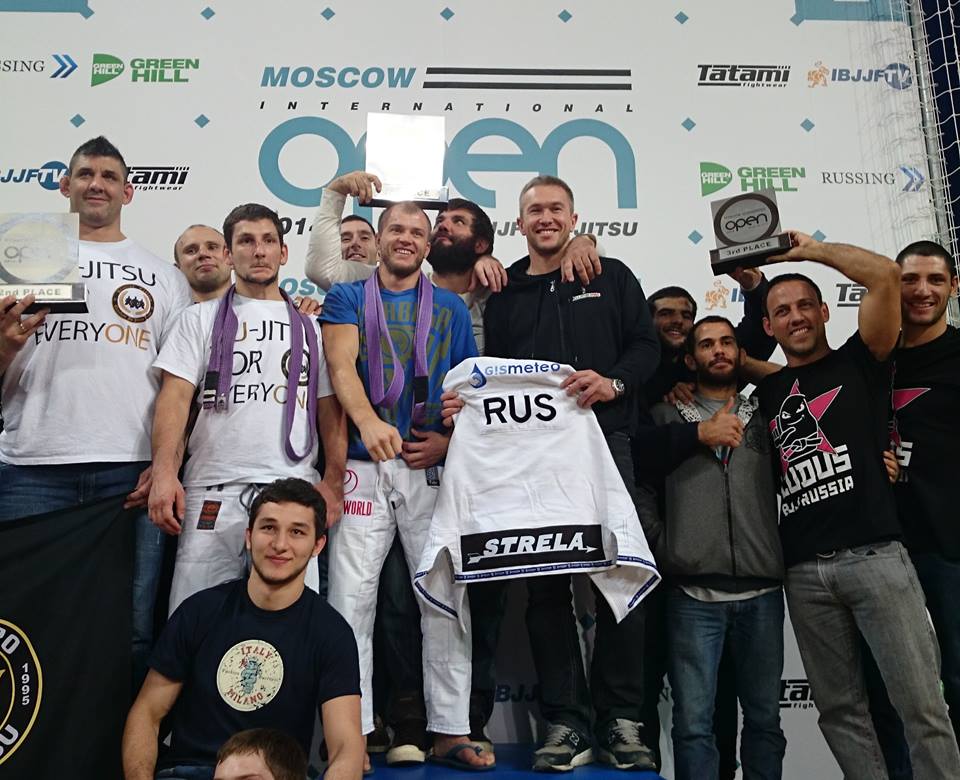
Strela Team

Despite what people say, Strela Team is perhaps the most successful and big team on the local Moscow competition scene here. A lot of the top guys from Lion moved there 4-5 years ago while others left Strela due to their focus on team loyalty / politics which has pushed also a lot of people away out of the club. You can see this from their interview approach for visitors or new members.

Dmitriy Selivakhin is the head instructor down there and no doubt they will remain one of the most important clubs on the local bjj scene for years to come.


-----------------------


Drop by a post if you have any questions or comments. I have mentioned a few major clubs with some other notable such as Zaleev Team (focused on No-Gi Grappling), Creonche and a few smaller clubs (without websites) out of the picture and probably no the best choice for visitors coming over.


I also wrote this post many years ago in 2009! if you are interested how the scene has changed


How Long Does it Take to Gain Black Belt in BJJ (basic grading guide)

Brazilian Jiu Jitsu is famed for being one of the martial arts where you truly have to earn your black belt on the mat with thousands of hours of drilling and sparring, showing the people around you that your skill in rolling is up to the level of black belt.

According to the IBJJF guide you have to be at least 19 years old to gain a black belt and should have spent a minimum of 4.5 years training at least 2 times a week. While this is clearly a minimum, there is no doubt that at the top-level competition academies, students train very often 2 times a day if not more combining all aspects of the sport from self defense and standing techniques such as judo throws, to gi and no-gi groundwork.

For example guys like Keenan Cornelius who clearly trained professionally at academies like Atos and Team Lloyd Irvin have dedicated themselves full-time to the sport and still only managed to reach the black belt after 8 years. 

Others such as BJ Penn and Caio Terra have been promoted much more rapidly and without a doubt remain one of the top brazilian jiu jitsu practitioners having won the world championships (IBJJF) at black belt level.

I think you would typically see a lot of practitioners reach black belt in around 10-15 years of consistent training. I think this should refer more to black belt level rather than the black belt itself as unfortunately today with the rise of the popularity of the sport, some instructors have started to bend the rules and gradually bring down the quality of the sport.

For example there is no denying that the level of intensity and general quality of the sparring partners varies significantly between academies. I personally have found that "family" style academies such as Gracie Barra have a much lower quality of practitioners with many blue belts corresponding more to white belt level and purple belts to blue belt level. Even though the instructors may be the top world class competitors, sometimes you will find that the academy as a whole and the head instructor will choose to promote some of his senior purple belts faster than he really should in order to show that his academy has a big group of senior grades and not just blue and white belts.

There is just no real escape from mat time and dedication required and I think to a great extent the quality of the teaching is very important. The student teacher bond whereby the instructor is really investing time into the student is necessary in order to achieve great results.

Overall I think the time required to achieve the technical ability to reach belt differs but I would say that one needs to be training for at least 2-3 years in each belt to attain a certain level of understanding of the techniques and develop the game. This fact is also supported by the polls I have held on this blog for a while now. I think 2 years per belt is something that is achievable with a minimum of 4-5 training sessions a week schedule and 3 years per belt at 3-4 sessions. 

That makes for around 4 trainings*50 weeks*3 years * 4 belts = 2400 training sessions overall to achieve the grade and 12 years of training required. 

2400/ (50 weeks) / 2 years / 4 belts = 6 trainings per week to achieve the black belt in 8 years

Based on the above you should spend 12 years * 12 months / 4 belts / 5 (since you can also have no stripes) = 7.2 months per stripe! (with 4 training per week)

Of course my calculation is probably a little more strict than reality. I think in reality most people will reach purple belt in 500 sessions and black in 1000 sessions.

It is of course a question of motivation.

Training 6 times a week you should spend 8 years * 12 months / 4 belts / 5 = 4.8 months per stripe


Thursday, 23 April 2015

Tips to Improving Your Brazilian Jiu Jitsu

Most of us at some point in our training starts to feel like they've hit a wall. Either its during grueling training when suddenly you start losing to guys that have been training far less than you but for us reason caught you in a bunch of subs or its at a competition where you feel out of place, knocked out in the beginning.

Here are some personal tips that may help you get better:

  1. Private Lessons: private lessons are expensive but are a great way to get over some hurdles. Write down on a piece of paper the positions where you tend to lose and ask your instructor to show you what to do in these situations. Many times you will attempt a sweep but fail to finish. At other times you have a submission locked in but then lose the position. Your INSTRUCTOR IS THERE TO GUIDE YOU. Take advantage of this. 


  2. Training Partners: "In order to become a Lion you have to Train with Lions" - Carlson Gracie. Yes indeed and the great Carslon Snr was right. If you are the top grade at your academy and are constantly winning every position against your training partners, you need to step up the level of training partners. Seek out opportunities to train with tough guys and they will show you your own flaws in your game that you need to correct. This is important for you to progress especially at the higher grades. 


  3. Competition: Even though competition is not necessary to improve, I really believe it is worth competing regularly. It will not only improve your motivation but help you gain varied experiences competing against players from other gyms and around the world. Many of us develop similar styles to our instructors. By competing you will learn that other players may have different approaches that you need to be prepared for.


  4. Visit Other Schools: While the word Creonche does pop up from time to time, the reality is that there are world class instructors out there and there is a high probability that they are not located next to your house. Go on holiday and visit Brazil. Fly to California and train at the best gyms down there including Atos academy and the University of Jiu Jitsu. Make new friends and enjoy jiu jitsu. In the process someone for sure will show you a thing or two about bjj that you did not know.

I hope these pointers will help a little some of the guys looking to improve. Any comments welcome!

Wednesday, 22 April 2015

Which BJJ Gi Should I Buy?

Every brazilian jiu jitsu player from white to black belt loves to buy a new gi - the main uniform in bjj which looks a bit like the judo gi and sometimes referred to as the kimono (wrongly)

Unlike 20 years ago today there is a whole range of gi's available sold both online in stores such as budovideos.com as well as at competitions such as the many IBJJF events where you can often buy at discount prices cool gear.

There are many companies that produce BJJ gear with the top brands including Manto, Koral, Hayabusa, Shoyroll, Scramble, Grips and many others varying in price and quality.

From my personal experience it makes sense to try a few different gi brands to get a feel for the different quality available. In any case you are going to need 2 or 3 gi suits for training so inevitably you will be looking for variety.

MY ADVICE:

 - Stay await from Koral and Gracie Barra GI if possible. Koral has been on the market a long time but the last experience I had with their GI was not a good one and the same goes for Gracie Barra. Both disappointed me in terms of quality although to be fair I think Gracie Barra now produce their GI's in partnership with Storm.

- Good to start with cheaper suits initially. You don't need to invest in the latest Shoyroll or Hayabusa gi to start bjj. There are plenty of more basic GI that are normally sold locally. Check with your instructor what he recommends as a starter GI. Tatami produce some cheaper suits you should take a look at as well.

- If you like to look good, make sure the colors of the GI, your current belt and rash guard match. There are plenty of different gis that work. Personally I think black gis go very well with purple and brown belts while blue belts go well with white. I think personal preferences play a big part as well but those are just my 5 cents!

Follow bjjmetrics.com  |  projudo.xyz for fight & grappling updates.