LA Times has just announced that according to an undisclosed source Fedor Emelianenko and his camp are close in term of their negotiations to join the UFC. In the past, a lot was said by various articles that it would be unlikely that this deal would be reached.
Now it seems something that perhaps should have happened two years ago is close to becoming reality. A win over Brock Lesnar would make Fedor not only the undisputed UFC and MMA Champion, but also would solidify any doubt in any one's mind about him. I think after that he can just sit back and even retire.
Sure a few years down the road there will be a new fighter that will come along and challenge him. Lets not get our hopes up so soon and wait for the official announcement. My wish is that Dana White does not screw it up and Vadim Finkelstein focuses on what is good for Fedor (fighting Brock) and not what is good for M1 Global.
M1-Global is due to have a press-conference today (13:00 29 July in LA) with Fedor Emelianenko participating. The M1 Global website informs us that the press conference is to announce news on M1 activities and on the developments related to the collapse of Affliction Trilogy, and Affliction as a promotion. I suspect though that they won't announce something before Friday though.
This is the fight that makes sense for everyone. I just hope they include Fedor's character as download for the UFC 2009 Game once they sign. That would be great for the fans! Keep your fingers crossed.
Brazilian Jiu Jitsu is perhaps the fastest growing martial art of today. There is no doubt that what has spawned such growth is the popularity and media coverage of mixed martial arts where jiu jitsu has been a key foundation for ground fighting, proven to be fundamental for any fighter inside the octagon.
The number of clubs has increased enormously. USA today has hundreds of clubs across the country affiliated with different branches of jiu jitsu, but all stemming from the founders, the Gracies. In particular, it is specifically brazilian or Gracie jiu jitsu that has overwhelmed the martial arts world in the USA. This style of jiu jitsu is the most popular in the country by a long way.
I believe it will take another decade or two for the sport to reach its pinnacle. Bjj popularity has been always directly linked with MMA, so as the MMA popularity grows in other countries (especially Europe and China which are big markets), BJJ will also grow. I don't think India will be a similar story just for the fact that they have very different sports traditions and I doubt these types of sport will become popular there in the near future.
Robert Drysdale in the Youtube video is so pessimistic. I don't believe this sport will ever be even nearly as big as mixed martial arts. BJJ is too technical and even bjj experts often love to watch mma rather than bjj, just because it is so exciting.
BJJ I believe is a martial art and a sport with very good potential. It has limited sponsors now and will have a little better sponsorships in a decade. This sport has potential to reach the levels of any pure martial art, excluding probably kickboxing and boxing. This is already a great achievement and I think if the politics are managed correctly, and bjj is not perceived to be a sport for the thugs but rather as a healthy way of life (just like Judo), then there is plenty more potential to garner support from government, sports bodies and in the end even Olympic Games. This is really a lot and we should appreciate this.
BJJ guys have done more than any other jiu jitsu style has ever hoped to accomplish. BJJ has become so popular that in the USA if someone says jiu jitsu, you immediately think brazilian jiu jitsu. In Russia for example the situation is different. If you say jiu jitsu in Russia, people immediately think traditional jiu jitsu with striking, both self-defense and under sport-like rules. There is just one serious club and the knowledge about bjj is only just beginning to spread from mma videos. Fedor is doing a lot and so is M1, but so far it is still perceived as a brutal, no holds barred activity rather than an organized sport.
Jiu Jitsu has an amazing appeal and extraordinary potential
Just take a look at BJJ Maps (bjjmap.com), launched by the fightworkspodcast guys. I mean there is no other martial art that has this. There are so many different shops, BJJ radio, social network, magazines, everything. BJJ practitioners are real fans of the sport unlike any other martial artists. You just don't see so many die hard fans anywhere else. I would say that probably there is a good 20% of bjj guys who are serious addicts. I mean for myself, I could never stop. Its just what I looked for always and when I found out about BJJ, I knew that this is what I really wanted to do. Check out this article
You won’t believe but I even went onto iTunes and there is a whole bunch of resources available there to buy for free and also paid. There are matches, promotions and even some kind of application you can use to improve your technique. You don’t get anything like this in any other martial art, even Judo.
I would also say that it is such a great sport that everything the fundamentals are more or less unchallenged. You walk into any dojo and the basics are the same. There is no real controversy about how to perform techniques because the correct techniques have been proven in competition. This is not the case for other martial arts like Aikido or Karate, both of which I learnt for some time. For these for example you go to a different club and you do some technique and they tell you to do it completely differently. I just hate this and I think you can kind of see in bjj and judo the ultimate true techniques. There are some controversial ones but I don’t really focus on those and I think only once you achieve a really high level you can really say something in this regard.
For this reason I think BJJ will become the biggest martial art, at least on the grappling side.
Some more names are now being announced for the ADCC 2009.
We have got
-65.9kg: Baret Yoshida. USA
-76.9kg: Pablo Popovich. USA
-87.9kg: Daniel Tabera. Spain
All are very experienced fighters and have competed in the ADCC in the past.
I think I'm going to have to make a table for the invitees so we can see everyone on one page broken down by category plus the superfight Robert Drysdale vs Roger Gracie which is going to be extremely awesome. More to come I gather.
I heard some rumor that Fedor Emelianenko might not be participating. Nothing on the ADCC official website about this however but with so much going on with Affliction and his career, who knows what is going to happen in the next month or two. Just have to hope for the best.
I have heard of the first two, Yoshida and Popovitch but not Tabera since he is less acomplished than the other two. Daniel Tabera of course has additional pressure among these guys since he will be representing Spain. Good luck to him.
It was with great anticipation that the MMA world waited for the fight of the year between the ex-UFC champion Josh Barnett ranked by some publications as the #2 heavyweight in the world and the greatest MMA fighter of all time Fedor Emelianenko. The event was to be held in the Honda Center in Anaheim, California and was the third installment of Affliction promotion organized events.
With this in mind, the entire MMA community has been very disappointed to first find out that Josh Barnett has been refused the license to fight by the California State Athletic Commission and later, after several days of rumors for last minute replacements, to find out that the entire show was cancelled. The fans and the fighters lost out enormously. You can blame Affliction and you can blame Barnett for this, or both. What is clear is that we have another wait ahead of us to see our favourite fighters.
Personally I blame Affliction. If you want to be an MMA organization, you must organize the process better and have a financially sound going concern before you sign fighters. You can't just have one fighter falling out at the most inconvenient time and later cancel the entire show. They should really test fighters for steroids in advance, so they have enough time to make any replacements. You can't run an organization like this. This is pure mismanagement on the part of Affliction.
What drives me absolutely insane however ia the fact that days after Affliction Trilogy collapses, we learn that Affliction signs with the UFC and set to participate in UFC 101. What are they kidding us? If they were so in trouble, than why can't they be just decent people and not hold an event at all? Tom Atencio is an idiot, I agree with Data White, who I really hate by the way.
Fedor, Finkelstein and M1-Global
I am Fedor Emelianenko's great fan. He is a great guy, incredible mixed martial artists and fighter. He fights for my own country, Russia.
What infuriates me however is why it has to be truly the case that Fedor has to negotiate not only as a fighter but on behalf of M1-Global. He leverages his success to give M1-Global success and this is where his own career suffers as a result and I only hope he realizes this soon.
By trying to negotiate deals for M1 Global - like this co-promotional rights that everyone keeps talking about, I think he is crazy and inappropriate to do so. You really can't expect UFC to create a competitor and let Fedor, it's new champ just walk-out and fight for them. Its insane what he is doing. Fedor should stick to being a fighter, and a great one he is. He is not a great business man and M1 Global should not jeopardize Fedor's career in this way. As for Vadim, you are conflicted. Who's interests you represent I am really not sure.
What Fedor needs to do right now is fight Brock Lesnar. This is the win that Fedor needs on his record right now if he wants to be remembered the greatest MMA fighter that ever lived. If he wins this fight, he can just retire and be remembered as the greatest ever.
I really appreciate his stand for Russia but he really should do so as a fighter not as a business man and I blame Vadim Finkelstein, "the MMA Villain", for this. Fedor could do more for Russia by being the best fighter and facing tough competition. Just imagine what a victory over Brock Lesnar would do for his fame.
Fedor should get good terms from UFC and the UFC needs to budge. I hate that corporate machine focused on profits, but this organization is solid. It offers a real stable career for good fighters who train hard and have the talent. He should get the rights to participate in other events, image rights etc, money, anything, all the things that a fighter could ask for.
Ok guys, this announcement has been out for a few days now but is still some very exciting news.
This year we are going to see Saulo Ribeiro the 6x BJJ World Champion and 2x ADCC Champion fight in the 99kg+ category which far above his natural weight division. in '99 he fought in the division narrowly losing to Jeff Monson in a very close match. This time will be his next fight competing with the giants.
Ricardo Arona was already widely expected to compete, so this was the final official announcement. The guy has never been defeated in ADCC and only fighter to have achieved this while managing to win both the 92kg and the open weight.
Rafael Lovato is also an impressive fighter coming in strong from success at the Mundials.
I expect to see great matches when I come over in September.
Just as the anticipation was mounting with less than two weeks to go before what possibly would have been one of the greatest fights in recent MMA history, Josh Barnett, the contender for the WAMMA belt has tested positive for anabolic steroids. The California State Athletic Commission will not license Josh for the fight and he is likely to be banned for a year with his career to be close to over.
Josh Barnett at 24-5 has recently been considered the number two ranked heavyweight fighter in the world and perhaps the best opponent for Fedor Emelianenko at this time. The match was set for August 1st at the Honda Center in Anaheim for the third installment of Affliction, known as the Trilogy. This was clearly one of the most anticipated bouts this summer for MMA fans and the fight that gave Affliction, the troubled promotion, a chance to survive for another event. (yet perhaps the last)
This is enormously disappointing. Not only has Barnett been caught for using steroids in the past (after the fight with Randy Couture), he has also denied any wrong-doing. It is sad that Josh has effectively lost the chance to prove himself in the most important fight of his life, and in the worst possible way. No matter what Josh says and promises, the steroid story will always be part of his legacy. I feel most sorry for Josh Barnett fans who must be very angry with him.
Right now it is a question who can replace Josh Barnett at such short notice and make the fight, the headline event that so many people have paid to come in see or watch live. So far a number of candidates have been proposed. Lets take a look at the list:
1. Vitor Belfort - initially one of the names, really a middleweight fighter who would have a significant weight disadvantage at185lb (93kg). The Brazilian mixed martial artist is at 18-8, known as "the Phenom" has been preparing for his bout with Jorge Santiago in Affliction.
2. Bobby Lashley - this WWE champion would have been the bout that could potentially generate the dollars. However with only four fights under his belt, Lashley has declined to fight at this time.
3. Brett Rogers - having recently joined many of the MMA heavyweight rankings following his sensational KO of Andrei Arlovski, the former UFC heavyweight champion, this fighter is another possible candidate and perhaps the best fitting.
Rogers, at 10-0 has already got some recognition and having had his last bout a month ago, he may be in decent shape. If so than this could be the best choice.
4. Ricardo Arona - perhaps the only disputed win that Fedor had back in Rings. Arona, the well-known MMA fighter and ADCC champion has not fought since 2007 back in Pride. This raises serious questions and coupled with the fact that he has little recognition in the USA, this could not be the best choice.
Others include Fabricio Werdum (who won't submit Fedor and is coming of a loss), Tito Ortiz and I am sure there will be others like Jeff Monson. Tito Ortiz would be the guy that could surely make the money for Affliction but again we need to find out more about what his conditioning is like. For sure this could be any one of these guys' best chance to fight the MMA king.
The general public's knowledge and impressions about martial arts have been formed by movies at least until very recently. First it was Bruce Lee then Chuck Norris, then Jean Claude Van Damme and Steven Seagal. My personal favourite has always been Jet Li. He is clearly a very athletic martial artist and visually very exciting to watch. He displays his amazing kung fu and it really is fun to watch despite the numerous special effects they have these days. You could literally watch for an hour and a half, a small ordinary looking Chinese guy massacre hundreds of people in unarmed and even sometimes armed combat and actually really enjoy it.
My favourite Jet Li movies
1. Kiss of the Dragon (2001) - best all round movie and I think one of my favourite movies generally.
2. Fearless (2006) - the fights are incredible all I can say.
3. The Fist of Legend (1994) - many classic fights from back when Jet Li was younger and starred in movies made in China.
4. The One (2001) - almost comical but still very enjoyable to watch.
5. Lethan Weapon 4 (1998) - Jet Li plays only a relatively small part as the vilain and dies in the end but its just a great movie.
I think one could divide the movies into essentially two categories. The first is movies with an asian martial artist (mainly Chinese) being the hero. Under this category I include both films made for asian audiences (like those Chinese movies) and films made for the western audiences, mainly in Hollywood. Jet Li, Jackie Chan and probably a bunch of other guys were stars in China and then moved on to star in western films. Typically the stars of the east don't talk much in hollywood movies. The reason being is english is not their first language, so acting is reduced to a minimum and the number of lines they have is limited. This is basically like Arnold Schwarzenegger and his career where he almost never speaks in his first movies and that gradually changes as he becomes a Hollywood mega-star.
The second category is movies made in the west by western actors. This category includes actors like Wesley Snipes, Chuck Norris and Jean Claude Van Damme movies. Actually I would add a bunch of others like Sylvester Stallone (Rocky) for example since after all boxing is a martial art not just a sport. All of these guys have western values but also they vary greatly in terms of their martial arts abilities.
On the one hand you have Sylvester Stallone who has no martial arts background (as far as I am aware of) who played the champion boxer Rocky Balboa. On the other hand you really have very capable martial artists like Chuck Norris who have a lifetime of accomplishments in the martial arts world. Some, like Jackie Chan were not originally involved in martial arts at all (dancing was his background) but became martial arts stars that everybody recognize today. It is understandable why it is the case. Martial arts and making movies are very different. They are completely different skill-sets. Fedor is an example. He tried a movie career but saw that this was not what he is really good at. He is good at fighting while doing martial arts films is also about being charming and about being liked by the audience. For movies you have to be able to draw the attention of the audience with sharp lines, jokes or whatever, which is what Bruce Willis and Jason Statham can do only too well. You have to be able to speak with one accent or be funny and it takes a lot of actor skill and talent to do this. The martial arts side they catch up on with good instruction from professionals.
Take-up of martial arts
The popularity of martial arts after martial arts movies became mainstream increased dramatically. People went in to learn Karate or Kung Fu because they saw this or that guy in a movie and thought that "Hey, I want to learn that". And you certainly can't blame anybody for it. Martial arts movies became popular more than thirty years ago and remain very popular with Hollywood producers as they often don't require much invention, are focused around a single hero and have a wide appeal. This is exactly what makes a sound business model for the studios of course.
So many martial arts proliferated. Kung Fu exponents like Bruce Lee and Jet Li made their art popular over a period of two decades in the west. Karate was also driven by movies with a series of films culminating in the 1980s by the Karate Kid franchise which earned Academy Award and Golden Globe nominations. Some of the things that action-heroes performed in the movies even to the uneducated was completely unrealistic.
One martial arts legend, Bruce Lee was clearly different from many others. He was clearly a legend of his time, delivering incredible martial arts performance on camera when visual effects technology was not yet available. The martial arts classic film "Enter the Dragon" where Bruce Lee stars as a fighter invited to strange island where a martial arts competition is held, clearly shows him in the initial scene fighting with MMA (or very close to it) gloves using a mixed style of striking and grappling. He was clearly ahead of his time and is today regarded as the martial artist that was ahead of his time despite the fact that at the time he did not have much grappling prowess.
People went and continue to go to their local martial arts schools and hope to become like the heroes in the movies. When they got their they were very surprised to find out that really you have to spend many years and even a lot of what you learn especially in some martial arts really does not work in real life.
Aikido was one of the latest "movie-martial arts" which grew in popularity with Steven Seagal's character and filmography. His visually impressive aikido skills coupled with an action-hero personally made him a superstar and aikido an exciting new martial art for the western public. Aikido, a japanese martial art founded by Morehei Ueshiba is one of the most popular martial arts today as a result and considered by some to be highly effective in self-defense.
Judo was kind of the odd one out. Judo was always pushed as a sport rather than a self-defense focused martial art. It proliferated more as a result of being included in the Olympic Games and due to natural popularity and obvious effectiveness. I don't think there was really a movie that affected this martial art in the same way movies influenced aikido, karate and kungfu. Judo as the grappling art was obviously less popular than striking arts for the purposes of the movie-business.
The other well-known but less popular art that has the same fate is Taekwondo, the Korean striking martial art and sport that was also included in the Olympics in 1980. This martial art never reached the level of popularity as the others and as far as I am aware the International Olympic Committee is now considering removing it from the list of Olympic sports and I suspect due to the fact that it is no popular and interesting to watch. (despite it being undoubtedly one of the more effective striking martial arts)
The other less well-known martial arts like Sambo (popular in Russia but nearly unknown elsewhere), Capoeira in Brazil and others didn't really get much attention at all in fact. So many different martial arts styles exist in fact. Karate alone has more than a dozen different styles and so does Aikido and traditional japanese jiu jitsu.
Brazilian Jiu Jitsu - the dawn of the new era
Brazilian jiu jitsu I think is the next chapter in the world martials arts history. They did not become popular and famous due to film however. They got famous by competing in televised, no rules competitions and primarily UFC. And by "they" I mean the Gracie family and brazilian jiu jitsu exponents.
Royce Gracie did more for brazilian jiu jitsu than probably anybody because he was in the right place (UFC 1) and at the right time. The UFC itself did the rest by becoming a huge organization in the US and promoting it's brand to now a significant percentage of the households in America.
By defeating each of his opponents, who were indeed bigger and stronger than him he drew the attention of many many people just at the right time that brazilian jiu jitsu (or as they would say gracie jiu jitsu) is an extremely effective martial art that can give a smaller guy an advantage in fight against a guy that is bigger and stronger. Royce demonstrated with his jiu jitsu the importance of having solid knowledge of groundfighting and grappling but it is evident that fighters of other grappling styles like Sambo, Catch Wrestling and Judo, with adequate preparation would have done well too.
Jiu jitsu like Judo I would also say is not visually exciting especially for people who are not knowledgeable in the grappling side of martial arts. I don't really see this martial art becoming part of the movie production business. Most people just don't understand what is going on. Some basic concepts can be easily explained but watching the Mundials is kind of boring for people who never heard of bjj or judo. They just don't understand what is going on and why this should be interesting.
I certainly look forward to watching Redbelt (2008), the first movie to show realistic martial arts and jiu jitsu in particular but I don't there will ever be a day when people will be as excited about bjj as they are about kung fu movies with Jet Li destroying a huge number of guys with chop-sticks.
Mixed Martial Arts however, the new name of the new sport born in the UFC and in Japanese promotions like Pride and Rings is visually exciting and appeals to many different people.
As a result, the first wave of incredible growth of the number of brazilian jiu jitsu clubs in the USA has been followed by a wave of new MMA clubs, something that has been driven by MMA going mainstream. This is something the UFC officials, like Dana White have commented on including in the last event, UFC 100. UFCs revenues are now exceeding boxing revenues in the United States i.e. ~$300M last year I understand, an impressive figure that will inevitably grow even more. It is easy to see why.
Just watch a decent MMA fight. No two fights are the same and there are so many possibilities. The number of techniques ranges in the hundreds and even thousands. As Dana White, UFC president put it, a crowd of people will turn away from watching basketball and soccer, and would go and watch a fight if it is happening nearby. Mixed Martial Arts are clearly the future with the potential to be as popular as the biggest sports today and movies will also come as popularity grows I believe.
Wrestling
UFC has also proven how effective wrestling is as a martial art. For most, Greco-Roman wrestling in particular is a very strange sport that nobody understands that is part of the Olympics.
The shear number of successful MMA fighters who have transitioned into MMA from wrestling (and I don't mean WWE, the fake wrestling that for some reason I don't understand is also popular) is enormous. Matt Hughes, Randy Couture, Quinton Jackson, Mark Coleman and so many others. Brock Lesnar the current heavyweight champion of UFC has also many wrestling titles.
College wrestling has always been popular in America but I think this art will continue to develop and will grow even more as a result of its success in MMA.
I really wanted to do this post for a while now on the great mixed martial arts fighters that have been produced in Slavic Europe.
First of all what is Slavic Europe you might ask? Slavic Europe includes countries in Central and Eastern Europe where Slavic languages are spoken. These are namely Belarus, Russia, Ukraine, Croatia,pb Bosnia, Czech Republic, Poland, Slovakia, Serbia, Bulgaria, Macedonia and a few other smaller territories.
My first idea with this ranking was to really to look at who were the heavyweight stars over the years. To my surprise MMA rankings is a relatively recent development. You can't really look at old rankings for even 2000-2009. This I think just shows how small MMA used to be just a few years ago and how big it has really become.
Fighters from Slavic countries are known for the fighting skills. Most of the countries were part of the Soviet Union where Sambo was a well-known sport practiced at the international level and contending at the time to be part of the Olympics. Even today various variations of Sambo are practiced in schools and clubs in most of these countries and remains extremely popular despite the growth of brazilian jiu jitsu, which is beginning to penetrate Eastern Europe but I think much more slowly than USA for example where media coverage and lack of related arts played a big part.
There are so many fighters that this region has produced. One could mention some of the mysteries of the sport like Igor Zinoviev who defeated the brazilian jiu jitsu legend Mario Sperry and Volk Han, a legendary Sambo practitioner who fought with Antonio Noguiera in Rings, displaying incredible grappling skill.
There are others who have been veteran mma heavyweights of the sport like Roman Zentsov and Ibragim Magomedov who have displayed there skills for years in the ring on an international level. They remind me of Mark Coleman who has been fighting for so long that has been included in the UFC Hall of Fame. Roman and Ibragim perhaps deserve the same.
Another great fighters is Vladmir Matyushenko who stands out as the great grappler from Belarus with a very strong MMA record, now competing in the light-heavyweight division.
Today there are new fighters coming on to the international stage including Kirill Sidelnikov and Jan Blachowicz from Poland. There are of course many others and I think there will be many new heavyweights in the future.
COUNTDOWN
7. Sergei Kharitonov (Russian)
Sergei Kharitonov will always be one of my favourite and most interesting fighters to have competed in Pride in my opinion. As a well-rounded fighter with good submissions and strong boxing he has proved to be a dangerous opponent, defeating such world-class fighters as Semmy Schilt, Alistair Overeem and Pedro Rizzo.
What makes him stand-out of course is his absolute dedication as a soldier. He fights while under active duty with the Russian Airborne Forces (Parachute Corps). He is absolutely dedicated to sports and training naturally. I heard for one of the matches for Pride he trained by just working outdoors with a shovel.
The guy is extremely tough but also I think very technically proficient. He is International Master of Sports in both Boxing and Combat Sambo as well as Russian National Kickboxing Champion among various other titles. Sergei's loss to Jeff Monson I think showed that there are areas where improvement is still needed and I wish this fighter to return to the top-10 world rankings as he was a few years ago.
6. Aleksander Emelianenko (Russian)
In my opinion (and I read also his brother's opinion), one of the most naturally talented fighters in MMA. He has a very strong background in grappling and at the same time he is an extremely powerful striker. Just take a look at the video below. It just shows what can happen when you step into the ring with a very powerful striker. And the same thing happened when he fought James Thompson. (although admittedly the ref stopped the fight prematurely)
His style I think is not really professional boxing though, at least looks to me. I don't know much about boxing but it just looks like he is a magician and judging the distance rather than being effective at throwing straight punches, the way Andrei Arlovski does for example.
Aleksander has faced some very tough competition and lost only to three very accomplished fighters, namely Fabricio Werdum, Josh Barnett and Mirko Cro Cop. The news that he got Hepatitis B makes it very unfortunate that he will not be fighting in Affliction and as I understand in any other big MMA promotion. This essentially means that Aleks will not be fighting quality opponents from now on.
Aleksander's fanatical love for tatoos and criminal past, and many other traits I think have pushed him and his brother Fedor apart. Aleksander trains in St.Pete, enjoying a very different lifestyle than Fedor and I think it is visible in his latest fights. He has added a lot of weight and does not look to be in the same condition he once was when he faced Mirko for example.
I hope he has a chance to share his experience fighting Barnett though with Fedor. You can see from the video below where Fedor trains with Aleks for the Barnett fight. Aleks is visibly out of shape compared to how he looked only a few years ago, especially the beer belly.
Despite not winning a major MMA title, I believe Aleks deserves fully his place at number 6 and I wish him well!
5. Andrey Arlovski (Belorussian)
Andrei Arlovski is a very interesting character I think in MMA. First and foremost he was the Undisputed UFC Heavyweight Champion having successfully defeated Tim Sylvia, Justin Eilers and Paul Buentello on his way there.
Andrei is known in MMA as an extremely technical striker with very good boxing skills which he honed from Freddie Roach (past Mike Tyson's trainer). An extremely good athlete he moved from his country of birth, Belarus, to Chicago where he presently lives and trains.
Apart from his prowess in striking, he is also a good grappler, having won the Silver medal in both Sambo World Championships and Sambo World Cup.
Good takedown defense skills and superior striking have allowed him to make a name for himself in MMA. Perhaps his only flaw has really been his chin. Andrei it looks like it has always been the guy that could not take a punch to the chin. This has been evident in the past, but was really highlighted by the loss to Fedor Emelianenko and later Brett Rogers.
I think you can also see how his weak chin has also played a part in his style of fighting. His striking is very long range and he is never eager to be aggressive in the fight. (apart from the flying knee against Fedor which was just plain dumb) And I think Andrei knows all about his chin, really ever since Vyacheslav Datsik knocked him out in his first MMA fight back in M1. If you look at his fight with Tim Sylvia or Fabricio Werdum. The striking is careful and so technical, where Andrey hopes to take advantage of his superior technique and not engage in close quarters, brawling and getting hit on the chin.
There is nothing that really can be done. It is a weak aspect of Andrei and there is nothing that can be done here. Today it seems his career is really coming to an end and I think he now urgently needs a win against a top heavyweight to bounce back.
4. Oleg Taktarov (Russian)
Oleg Taktarov "The Russian Bear" was the UFC 5 Heavyweight Champion and one of the most durable and calm fighters in MMA. He has never been submitted and most notably fought Ken Shamrock for the UFC Superfight title in a 33 minute bout which ended in a draw.
His intriguing style has been well-observed where he has utilized rarely seen Sambo techniques in MMA. He is also perhaps the first successful MMA fighter from the ex-Soviet Republics who displayed Sambo as an effective grappling martial art in MMA back in the mid 90s.
It is really a shame that we never got to see the ground battle between him and Renzo Gracie which would no doubt have been an exciting showcase of Sambo vs Gracie Jiu Jitsu.
Today Oleg Taktarov is a movie star and inspires I think all Sambo practitioners around the world to practice this martial art. He recently returned to MMA competition but looked rather out of shape and is certainly not the "Russian Bear" of the 90s, but I would definitely put him in my list of favourite MMA fighters of the 90s.
3. Igor Vovchanchyn (Ukranian)
Igor "Ice Cold" Vovchanchyn was born in 1973 in a small Zolochiv, Ukraine. Igor focused initially on kickboxing and by 1993 he was the IAKSA world kickboxing champion. Despite being only 5ft 8, Igor became known as one of the most brutal and also popular fighters due to his powerful striking and KO power. His unique style allowed him despite the fact that he did not possess substantial grappling skill to succeed in mixed martial arts competitions.
Vovchanchyn successfully transitioned into MMA and competed in Pride where he defeated most notably Kazushi Sakuraba, Gary Goodridge, Gilbert Yvel and Mark Kerr. He was runner up in Pride World Grand Prix 2000, losing in the finals to Mark Coleman.
Later in his career, Igor accumulated injuries which clearly affected him but his record of 33-1-1 until he fought Mark Coleman was truly impressive. If you haven't heard of the guy, just take a look at this highlights video of one of the most devastating strikers ever.
2. Mirko "Cro Cop" Filipovic (Croatian)
Mirko is an incredible fighter. One of the greatest strikers to have ever fought in MMA as is Igor Vovchanchyn. Cro cop is legend for his powerful high leg kicks with which he has been successfully knocking out many of his opponents including Aleksander Emelianenko.
Cro Cop in the past IKBF World Heavyweight Full Contact Champion, K-1 World Grand Prix 1999 Finalist, K-1 World Grand Prix 2000 in Fukuoka Finalist and PrideFC 2006 Open weight Grand Prix Champion.
Mirko's rapidly improving jiu jitsu and wrestling has made him a siginificant threat to any fighter in the MMA ring and with many followers. At the height on his form, he fought Fedor Emelianenko in a historic battle that Mirko lost by unanimous decision.
Since joining UFC, Mirko suffered many injuries including going through knee surgery which took a long time to recover. Despite his two losses in the UFC, I believe he still has many fights and victories ahead of him. I believe he would be a great challenge for Brock Lesnar who I think has never faced such an athletic fighter with devastating striking abilities. We already saw his devastating kicks force Choi Hong Man, another giant to submit.
1. Fedor "The Last Emperor" Emelianenko (Russian)
Fedor is the greatest fighter of all time according to Inside MMA and the best pound for pound fighter today by numerous accounts and publications. So far undefeated, Fedor is the WAMMA Heavyweight Champion and the last Pride Heavyweight Champion (undefeated).
Fedor Emelianenko there is no question is the number one on any list. I wish The Last Emperor well in his next fight with Josh Barnett on 1st August 2009 which will no doubt the most anticipated MMA fight this summer.
Here is one of my favourite fights in MMA, Fedor vs Kazuyuki Fujita when they fought back in 2003 in Pride. A great fight and really enjoyable to watch!
I think what makes Fedor is so amazing is not that he is amazingly strong, or big or anything else. It is the fact that he can always find a way to win the fight. Everyone makes mistakes but he makes fewer mistakes than anyone it seems.
Of course the fact that he is so well-rounded gives him a lot of flexibility. He can finish the fight on the ground via ground and pound or via submission, or he can finish the fight from standing.
I think one of the most amazing things was his submission defense against the americana that Mark Hunt had him in. His technique is very proficient and he controls the fight from start to finish.
The other thing with Fedor is I think he has incredible natural talent, he would be good to have in a fight even if he did not know any martial arts!
A few other names have been added to the ADCC list. I have to say, the list of fighters this year is incredible.
-65.9kg Leo Viera - 2003 and 2005 ADCC Champion in under 66kg and world-renowned brazilian jiu jitsu practitioner
-76.9kg Georges St Pierre - Current Welterweight UFC Champion and ranked out of the best pound-for-pound MMA fighters in the world by many sources.
-87.9kg Nate Marquardt - seven-time middleweight King of Pancrase Champion
-98.9kg Dean Lister - former King of the Cage Champion and 2003 ADCC Absolute Champion. 2x national US Sambo Champion, 4x Machado National US BJJ Champion, National US Gracie BJJ Champion.
+99kg Jon Olav Einemo - 2003 ADCC Champion in the 88-98kg weight class and the only fighter to ever defeat Roger Gracie in ADCC
Tickets will be available on the Internet soon for those hoping to attend. They are going to announce where you can buy them on the ADCC website and since I am also planning to attend, I will post the information as soon as it become available!
Watched UFC 100 this weekend. Great card and I really enjoyed every fight. Dan Henderson was particularly impressive with his stand-up while GSP was just great all-round. (definitely should fight Anderson Silva)
now turning to Brock Lesnar vs Frank Mir:
The Brock Lesnar win was a huge disappointment for me. Frank Mir was simply man-handled the whole fight except for a few good punches he landed on Lesnar in round 1 before getting taken down again. Brock dominated (and well done to him) and Frank got himself into a position where he did not want to be. Lesnar got him in his favourite half-guard and carefully started pounding on him as was expected. Frank got himself in that position and could not get out. This was basically expected and it came to me as a surprise that Mir was not better prepared.
Mir trained and trained for this fight, and I don't know what it is. I think probably Mir lacks the explosiveness and the speed to turn the fight the way he wants. Couture on the other hand did not experience the same problem. Couture got caught by a punch. Having seen this fight I think Frank Mir really needs to work on controlling the fight, on his wrestling. If he can't sweep Lesnar or escape the half guard when Brock is on top, then he should aim not to be in the position at all.
In my opinion Brock Lesnar did not do anything in that fight that he could not have done in the first MMA fight he had. He did not display anything but control and wrestling which he had in the beginning. The more I see Lesnar fight, the more I see that he is beatable. If one can block his takedowns and keep the fight standing, this could be one opportunity to win. The other is to take him down instead and put him on his back.
It would be great to see from Lesnar some other skills that they say he has. His jiu jitsu, his leg strikes. I would love to see Cro Cop vs Brock Lesnar. Cro Cop is extremely athletic and is quite good at wrestling actually. This would be a great fight although of course the Fedor vs Lesnar fight would be incredible!
I have thought a lot about this topic and I believe it deserves some attention whether you take private classes or train in a group. Even if you are a complete beginner and just wanted to find out what it is like to take private lessons, this is the post for you.
Before going in to a long discussion of the merits and problems of each type of teaching, I will list them in terms of priority.
Advantages of Private Lessons
1. Instructor time and attention - in private lessons you get one-on-one instructor attention. He can correct you, show you tips to improve and answer any questions you may have.
2. More flexible schedule – you get a chance to select what day and time fits you best which is great if you have an inconvenient work schedule.
3. You get a choice - some instructors will let you choose what you want to learn and what you want to improve in your game. I imagine teachers vary in their approach but you get to choose the teacher.
4. Efficient use of time. You are not held back by other students that have difficulties with things you do not. You can focus on where you have problems rather than spend time on what you are good at already.
5. You don't really meet with people you don't like who may not make your lessons enjoyable. For example people that are very rough, smell or anything like that.
Disadvantages of Private Lessons
1. Expensive – I hear lessons can cost from $40-$50 for purple and brown belt instructors to up-to $300 for 45 minutes if you are being taught by Marcelo Garcia for example.
2. Less sparring diversity, you miss out on lots of experiences sparring with people of different body type, weight, height, age, strength etc
3. You don't really get to know and can't make friends.
4. You don't really get a feel for the level of different opponents with various years of experience or belts. Basically you know what to expect roughly from a new blue belt when you train for a while in a class environment.
Private lessons are a great way to both learn and improve you game. If you want to train more intensively to improve a specific part of your bjj or judo, private lessons will really help.
I personally recommend to take private lessons together with someone. Training in pairs is great for private lessons because you really need to see the technique performed on someone else. It is difficult to learn when the technique is being done on you sometimes. The instructor also has a chance to look, observe your technique and teach you better. It is sometimes easier for the teacher too when he can see you spar with someone else. Of course the other thing is that you can split the often pricey private lessons with you friend.
Another thing I wanted to mention is that if you can train regularly and often, this can sometimes mean you can get a lower price for you lessons. A discount since you are committing for many hours at once.
--------
From my experience I've seen classes priced between $40-$100 per session. I had private lessons and I really enjoyed them. It was an opportunity for me to ask questions which did not get the attention and opportunity to ask in the normal class environment.
If you are visiting another country and want to train there intensively for a short period of time, buying an annual membership and going to every class may not be the best option for you. I personally just went for private lessons and trained intensively for two weeks every day and it was great. I recommend having a private lesson in the morning and then a regular class afterwards or in the afternoon. This is a great way to train and learn a lot each day.
I really picked up a lot, revising all the techniques I have learnt in the previous class, asking questions and really thinking how to get better and I think private lessons are great whether you do Judo or BJJ.
When I started learning bjj, I had already some experience. I did some Judo a few years back for a year while at university and also a year and a half of traditional jiu jitsu. My first class was not really much of a surprise actually. I always knew I enjoyed learning and becoming good at groundwork vs. the stand up game since I was naturally much better at it than stand-up judo.
BJJ techniques I loved from the start. My first technique that I started to apply after very few lessons successfully was the scissor sweep. It is basically the first one you learn and it is probably a very difficult one to carry out successfully against and advanced player. Some I heard say it is obsolete, but I found that I could do very well with it and it showed me how much more there is to learn.
Watching DVD instructionals helped a lot. Personally my next big step as I saw it was learning about the half guard and how effective it really was. As a Judo player I saw the bottom half-guard position as highly disadvantageous and really had little idea how to improve from it. I basically focused on getting back to closed guard instead of sweeping. So when I finally saw Saulo Ribeiro demostrate his half guard techniques in his Revolution 1 series, I was really amazed. I simply could not believe how much there was to the position and I further was impressed when I watched Rigan Machado's DVD "Secrets of the Half-Guard". The half-guard for me turned out to be fundamental. For those looking to improve this part of their game, I really recommend starting by pulling half-guard in sparring and developing from there by practicing some of the basic sweeps and then passes.
My preference is really to sweep and pass the guard. I love to submit opponents but when I train I feel that submission is not as important to carry out as achieving a good position. This is because submission often requires strength and I prefer to develop my positional game further rather than spending a lot of time trying to apply a certain submission during training. I also try to as our masters tell us to give weaker players a chance. It is actually very satisfying to give your weaker opponent an opportunity and then fight back with your own technique.
It is certainly great to cross-train in both jiu jitsu and judo. I've always loved rolling with strong judokas. The game is a little different and I am very aware of the pins. It is good practice on working not to be pinned by your opponent. Of course you get to display your superior groundwork as well. Judokas can be extremely athletic and strong. I think it is worthwhile practicing against every kind of opponent and taking something away out of every defeat.
Having sometimes grappled with Sambo players, I have also focused on my leg lock defenses and in particular the straight ankle lock. When I first sparred against a Sambo player having been only trained in Judo, I was very surprised. The guy was very quick to go for the straight ankle lock and I simply was not prepared. I did not know what to do and instinctively tried to stand up but was too slow to do so and had to quickly tap out. This was a lesson that taught me that I had to learn those as well and showed me that Judo was not complete.
Jiu jitsu, judo, sambo. Really all these are one single art. The art of grappling and submission. It will almost certainly take me many many years to master this art. And I am only talking about the with-gi side. To me it seems there is no universal truth here. No one has completely mastered the art but there are many guys that have mastered the foundations and have gone beyond them and I really hope to do so myself one day.
Eddie Bravo is one of the great innovators in brazilian jiu jitsu. The JJ Machado blackbelt has made an immense contribution to the sport over the years and here I will try to cover only one of his very well-known developments known as "the Rubber Guard". For those who don't know, his biggest competitive achievement on the mats has been defeating Royler Gracie in ADCC 2003. A tremendous feat by any account.
The idea really is to improve and move away from the classical jiu jitsu guard position which is considered dangerous and over-reliant on wrist control. In MMA the guy on the bottom using the traditional guard is in danger. He needs to control his opponent in order to prevent ground and pound and this maybe very difficult to do if the guy postures up and has strong arms. Of course the are exceptions most notably Antonio Rodrigo "Minotauro" Nogueira whose exceptionally strong grip and an amazing chin allow him to withstand a terrible beating.
Many people however don't want withstand such a beating and have neither the grip strength to control the opponent nor the chin. Eddie proposes to use the Rubber Guard to control the opponent and use it to attack. A bunch of setups are available here like the omoplata, gogoplata and the triangle choke from the Rubber Guard.
Opponents argue that the Rubber Guard does not work. While it is clear that both the classic guard and the rubber guard don't have a very high success rate, some like Shinya Aoki have been successful with the Rubber Guard winning Pride Shockwave 2006 with it. Aoki, a well-known submission specialist is credited to have the best Rubber Guard in MMA by Bravo I've heard in fact.
My view is that this system has a good chance to be accepted but this needs time and success. So far there has not been such overwhelming success in application of the Rubber Guard in MMA or in jiu jitsu tournaments. Jiu jitsu fighters will learn it only if it works. The Rubber Guard needs successes in competition and perhaps it is just a question of time. Today there are just too few proponents but who knows, as 10th Planet Jiu Jitsu expands, more and more fighters will come out of there competing for the gold!
The UK has been one of the countries where brazilian jiu jitsu has been growing at an enormous pace. Looking at the history of jiu jitsu in the United Kingdom, clearly there were many people that made the sport as big as it is today but none were as important as perhaps Maurição Motta Gomes. A lot is said about bjj history in this country and the best article I have found is by Slidey, a very professionally written article as everyone I think would agree.
Today there the sport is still growing at an amazing rate and I think there are good reasons. One is I think the popularity of MMA in the UK is big. UFC is being shown on Sky Digital on the Setanta Sports channel and their are many fans there. Two of the top brazilian jiu jitsu champions Braulio Estima and Roger Gracie are based in the UK. Many new talented athletes are coming to train under them today.
Also the fact that the USA where brazilian jiu jitsu is already extremely popular is helping. Many english speaking players are coming over to the UK to train. The number of brown and black belt practitioners is growing as fighters get promoted and open their own academies.
You only need to take a look at the recent BJJ British Open to see how far the sport has gone. At 620 competitors on 8 mats, the event shows how popular bjj has become. I think there are few martial arts events in the UK that include so many competing practitioners already and I think in the years to come there will be even more people taking part.
I think we all will be looking forward to the Gracie Invitational 2010 competition. It will surely be the biggest event yet.
Guys, with less than three months to the ADCC 2009 event (held 26-27 Sep) I'm going to give a short update on the people that look like they are confirmed so far according to many sources:
Invited so far by the organizers:
Ricardo Arona - ADCC Champion
Gegard Mousasi - Dream Middleweight Champion and former Cage Warriors Middleweight Champion
Gabriel Gonzaga - CBJJ Mundials 2006 winner in black-belt division
Fedor Emelianenko - WAMMA Heavyweight Champion and former Pride Heavyweight Champion
Dean Lister - ADCC Absolute Champion 2003
Below are athletes who managed to earn places through the various qualifiers around the world, as well as the winners of previous editions of the event.
Superfight Roger Gracie (Brasil) vs Robert Drysdale (Brasil)
Men Under 65.9kg - Rani Yahya (Brasil) - Kouhei Yasumi (Japão) - Rafael Mendes (Brasil) - Nicolas Renier (França) - Timo-Juhani Hirvikangas (Finlândia) - Ryan Hall (EUA) - David Marinakis (Austrália) - Jayson Patino (EUA)
There is so much discussion on the Internet about Judo and BJJ and there is a lot to discuss here. Some Youtube videos compare effectiveness, displaying fight videos of jiu jitsu practitioners going against famous judo players. Others discuss the history behind the sports. In this post however I wanted to cover the training aspects of the two sports.
CURRICULUM
When you compare the two sports by attending a session in each, you cannot help noticing the similarities between the two. Judo and jiu jitsu have always been very similar. Both predominantly gi-focused sports and by that I mean most of the classes are taken with a gi (or kimono).
Both will have a typical warm-up session including grappling specific exercises like crawling and various hip movement drills. You will be practicing break-falling (ukemi) in both. Neck exercises and cardio exercises are also very common to both but I think here it also varies a lot with the teacher you have. Different instructors favor different exercises but all are fairly similar especially in terms of the muscles and abilities they aim develop.
Once the warm-up is over, typically the instructor demonstrates several techniques that are then practiced by students in pairs. The other core part of the session is normally sparring which can either be free sparring which is when anything goes or more goal-oriented sparring. By "goal-oriented" I mean when the teacher allows you to use only certain techniques in order to achieve a set goal. This can be for example passing the guard with a goal of pinning your opponent.
SO IF THEY ARE SO SIMILAR THEN WHY TRAIN IN BOTH?
I do my best to train in both of the martial arts and I am going to give my reasons here:
The #1 reason why to train in both is to become a well-rounded fighter.
Judo has its limitations in a number of areas.
First of all, it does not prepare you for every situation and only focuses deeply on one area of grappling. By practicing Judo you will quickly develop strong standing technique. You will learn a set of throws and takedowns which will make you a dangerous fighter while standing. Some of your throws however may be impractical under non-Judo rules.
The crucial part is landing on your back. A well-executed throw with the fighter being thrown directly onto his back results in an immediate win, known in Judo as the "Ippon". Under jiu jitsu rules however, takedowns give you two points but not a decisive victory. At the same time some throws such as for example the classic Ippon Seonage when not successfully completed may mean you end up with your opponent gaining control and securing the back-mount. (a highly disadvantageous position in jiu jitsu).
Learning Judo and developing your throwing technique will also surely improve your takedown defense.
"Leg Locks - the great equalizer"
The most obvious weakness of Judo however is the limited syllabus of groundfighting techniques. Judo disallows all of the leg locks available. This is a big one. Leg locks as Stephen Kesting says are the "Great Equalizer". Even if you are a strong Judo grappler, not knowing your leg lock defenses may mean you may be easily caught by ankle locks, toe holds and knee bars to name a few most common and effective techniques.
The other reason why leg locks are can be called "The Great Equalizer" is of course that beginner and intermediate practitioners sometimes develop their leg lock technique and trying to compensate with them their poor guard passing technique. Really they combine at a high enough level and should be developed together.
So what you find is that jiu jitsu takes your groundgame to the next level by incorporating bjj techniques and increasing the variety of techniques.
Cross training in Both?
So by practicing both brazilian jiu jitsu and judo it is obvious that your are improving both your standing-game (Judo) and ground-game (BJJ). The two arts complement each other and that is why cross training in these arts is so beneficial. Both are primarily gi martial arts and therefore if these arts you should become a great with-gi player.
Drawbacks?? Hey the only one is simply time. You must be dedicated to succeed in any martial art or sport and it is no different here. Both standing and groundwork require a long time and regular training.
Got this DVD a month ago from Budovideos. I heard Ginastica Natural is very beneficial and is practiced by many high level jiu jitsu competitors together with yoga in order to improve ground mobility and flexibility. Saulo and Alexandre Ribeiro practice this system as well as Andre Galvao and many others. You can see the Ribeiro brothers training and using Ginastica exercises on the "The Road to a Championship" DVD.
The DVD includes a demonstration of two dozen techniques plus demonstrations of some exercises to improve strength and flexibility. Alvaro Roman, the creator of Ginastica demonstrates every technique himself and I have actually practiced every technique while actually watching the DVD.
There is also a section "Ginastica for the Outdoors". Wow, this was a cool demonstration of what exercises you can do outdoors.
Generally I think this is very useful and really is focused for jiu jitsu. Romano is a very experienced jiu jitsu black belt and shows his immense flexibility and explosive strength in this DVD. I really enjoyed it and I think it raises more awareness of the importance of physical conditioning.
The only thing I think is the price is a little excessive. A DVD worth $50-$60 should include I think more materials and you can buy jiu jitsu DVD set for this money.
Jiu Jitsu has many attractions when you consider which martial art to learn. Martial arts are known to take years to learn and decades to perfect. It is worth studying what you enjoy and jiu jitsu has been a very attractive martial art and sport that has been growing rapidly around the world in the last two decades.
PROVEN AND EFFECTIVE MARTIAL ART
First of all, it is proven to be effective. You see it being applied all the time in mixed martial arts tournaments today. A skilled jiu jitsu practitioner has an enormous advantage over an unskilled grappler as has been demonstrated on numerous occasions by many jiu jitsu fighters including Royce Gracie in UFC.
The art allows a weaker fighter to defeat a stronger and heavier opponent. One well-known and very effective submission that demonstrates this from jiu jitsu is the famous triangle choke which can be applied from the guard position when a stronger and heavier fighter attempts to pin down or simply attack the brazilian jiu jitsu player on his back. This actually makes the art very attractive to women looking for a self-defense system that can be used in real life.
One of the reasons why jiu jitsu is so effective is due to sparring that is normally practiced in order to make sure techniques can be applied when the opponent resists. A jiu jitsu player normally masters a technique when he can effectively apply it against his opponents who exert full resistance and attack with their own techniques. This is different to many other martial arts like aikido for example where many of the techniques can only be applied when both partners cooperate.
Although jiu jitsu academies rarely focus a lot of time of self-defense-only techniques, they are available and can also be used in street situations. Many of these techniques are from standing are used in combination with strikes.
A GREAT SPORT TO GET INVOLVED IN TO GET FIT
Brazilian jiu jitsu (and also Judo) are great martial arts to get fit. Both ground and stand-up grappling involve a lot of cardio exercise while sparring and warm-up exercises improve endurance, upper body strength and also flexibility. By regularly attending training, you are bound to improve your overall fitness level.
Many of the exercises available strengthen specific body muscles used in a grappling match. Normally such exercises strengthen grip strength, neck, arms, stomach, back and legs.
Check out Chuck Norris and Machado Brothers in Walker Texas Ranger youtube video below!
Russia has always had strong judo traditions. Ever since Vasiliy Oshepkov, the grandfather of Russia Judo came over from Japan in 1914 having studied the art at the famous Kodokan school, the sport has been growing and entrenching in the ex-Soviet Union countries including Russia.
(Vasiliy Oshepkov pictured below)
Oshepkov was only the fourth foreigner and the first Russian to attain the degree of "Shodan" in Kodokan Judo at the time. Formidable in his physique, Oshepkov was nickname the "Russian bear" by the Japanese for his strong build. Mr. Oshepkov is said to have weighed approximately 220lb (100kg) at the time.
Oshepkov was also one of the founders of the Russian sport and self-defence system called Sambo which replaced judo during the 1930s when Judo became highly politicized by the Soviet government. Sadly, Vasiliy Oshepkov himself was accused of espionage and executed in 1937.
The students that Vasiliy taught together with other practitioners across USSR continued to practice the art however and by 1964, very soon after Judo became an Olympic sport, the Soviet Union took four bronze medals at the Tokyo Games.
This success was to continue until the fall of the Sovit Union with many famous Judokas taking medals in every tournament including the Olympic games but since then success has very much eluded Russia. Despite Russian judo players being ranked among the top in their weight classes, Russia could not gain a single medal in the Beijing Olympic games.
Today, a lot is being done to revive the Judo traditions. A new coach, Ezio Gamba has been hired to take the Judo world by storm, the man who took Olympic Gold back in Moscow in 1980 from Neil Adams in the final.
There are high hopes for 2012 London Games, support from the country's great Judo fan Vladimir Putin and I think after five golds at the recent European Championships, Russia will one day impress the world in this sport as it has done in wrestling in the past.
Russia is a country with great potential in both Judo and Sambo and the popularity of both sports is increasing with the emergence of mixed martial arts. Fedor Emelianenko is one man that has made an enormous contribution in this area and now many are choosing combat sambo as a result.
Judo in particular grew due to the character of Kano himself and his work to make Judo a mainstream sport. In this task he succeeded thanks to his ability to lobby for the sport in high echelons of the government and I think Judo has a chance to make a comeback in Russia as the same is happening in Russia.
Fedor Emelianenko, one of the best judo and sambo fighters turned to MMA for the money in 2000. He shocked the world and today has an incredible record 30-1 with only one technical loss due to a cut.
Despite being known around the world with more videos on youtube than perhaps of any other mma fighter, he unfortunately remains an unknown in his native Russia, except perhaps for his native town in Stary Oskol. In a country where the Ukrainian boxers (the Klitchko brothers) are known by nearly every granny in the country, Fedor remains unknown to almost everyone except the dedicated MMA fans.
Fedor Emelianenko is one of the very few Russian's that have become highly successful in MMA on the world stage. The only other native Russian fighter that in the past held a big MMA title was the UFC champion Oleg Taktarov. Observing the current world mma rankings, the only fighter from Russia in the top-10 is Fedor.
Russia is known for being a country with good sports schools and many exceptional athletes. One example is Alexander Karelin, an incredible Greco-Roman wrestler widely considered the best ever in the sport. Many of the combat sports receive very little media attention. Tennis, soccer, biathlon, ice hockey are very popular. Judo, Sambo and MMA receive very little media attention. Only recently has Boets TV (Fight TV) channel has been launched dedicated to the sport of martial arts.
Despite Vladimir Putin's Judo interests and even personal support for Fedor, the sport remains misunderstood. Media do not provide any air time and today MMA fans are doing a petition to have the Josh Barnett vs Fedor Emelianenko fight aired. It is unbelievable that in a country where most channels are controlled by the state, Fedor's performance is not aired due to expected low ratings. The man promotes Sambo around the world with his invincibility in the ring and such a small gesture cannot be made.
For all Fedor fans out there and Russian MMA, I am writing to say that Fedor, your are one of the greatest heroes in Russia ever and you have all of our support!! Keep it up!
There is so much discussion about this on the Internet and so many videos on youtube now. Brock Lesnar is over-hyped, few matches, mediocre record and really he is not even that big. When you look more closely he is not that much bigger than the likes of Josh Barnett and at the same time he is miles behind them in both grappling and boxing technique. His only chance is really using his power, wrestling and applying his ground and pound. And he really has so much power! it is incredible. Visually he looks good at times especially dominating the Frank Mir fight the last time they met.
Frank Mir is actually a strong grappler, a bjj black belt and certainly I think that this is where he should focus. He knows Lesnar's game plan, avoiding exchange of power and looking for openings to submit him. Lesnar has shown that he has the speed and the KO power. His tactic to me seems to get a dominating victory early by KO whether standing or by ground and pound, but if Mir can control Lesnar in the first two or three minutes and take the fight to the ground, this is where he can take advantage of holes in Lesnar's grappling. The knee bar is said to be a relatively easy leg lock to defend (by which Lesnar lost to Mir the last time they fought). It is therefore unknown whether Lesnar has improved at least his submission defense
And Mir is no small guy himself. Both have the same weight (at 265lb) and Lesnar is only 1 cm taller. Practically the same size. Brock just looks like some sort of monster for his size although small compared to real giants like Choi Hong-man weighing in at 330lb and standing tall 7ft 2in (2.18m). No doubt everyone would be interested to see that fight that I hear nearly happened.
Mir says that he is also improving his standup skills. So far it seems to me that Brock prefers not to push for stand-up fighting but he rather work the take-down.
My Prediction: Frank Mir by submission or decision.
Affliction: Fedor Emelianenko v Josh Barnett, Anaheim, California, August 1
UFC is a great organization with many strong fighters. In fact UFC alongside Pride made MMA mainstream in many countries. It is the reason many of us are into MMA and why brazilian jiu jitsu is so popular today.
I have recently been watching over and over Barnett's fights. He looks strong standing but very careful. His last fight with Pedro Rizzo is a good example of this. At the same time as we all know he can be very lethal on the ground, looking very comfortable grappling with the likes of Nogueira who was in fact defending some of those leglocks.
With Fedor I imagine the fight will initially be a standing battle. Fedor I think will be a little more aggressive standing and he really should keep it standing, defending takedown attempts from Barnett. I think strategically for Fedor it would be better to remain standing and once he overcomes Barnett there he should work towards ground and pound. Barnett is probably almost impossible to submit so a standup battle is in his best interests.
For Josh I think his best place is actually on the ground. Working a good takedown and passing the guard. Josh is excellent with leg locks but I think here he should look to secure the cross-mount the same way Mark Hunt did. Controlling Fedor on the ground will be a nightmare too though. Fedor is competing in ADCC this September so I believe his grappling will be world class.
Fedor is my favourite fighter but what I really want is for both fighters to train incredibly hard and put every effort into giving everything for this fight. This fight will go down in history as one of the great fights together with Fedor vs Nogueira and Fedor vs Cro Cop battles. This is the perfect time for their fight. Two great heavyweights at the height of their abilities.
UFC: Anderson Silva v Forrest Griffin, Philadelphia, August 8
Anderson Silva has been named to be the best pound for pound fighter in the world. Nicknamed "The Spider", Anderson's record is 24 victories and 4 defeats holding currently a nine win consecutive winning streak. The current middle heavyweight champion is facing little competition these days and it only seems natural that he moves up to compete against the ex- Light Heavyweight UFC Champion.
Forrest has faced well-rounded fighters in the past like Mauricio Rua but this time he will face a very careful but effective striker in Anderson compared perhaps only to Lyota Machida. Mr. Griffin is looking to change his game away from being a straight brawler. Anderson is an extremely able striker and perhaps the only thing he lacks is real power that many real heavyweights possess. If Forrest can control the fight and work outside Anderson's comfort zone he could stand a good chance. Anderson is tall and normally fights guys that tend to be smaller than him.
This time, Anderson will be facing a very different type of fighter who is able to take a punch and move the fight to the ground using his power to get a win by decision.
UFC: Randy Couture v Antonio Rodrigo Nogueira, Portland, Oregon, August 29 Randy vs Minotauro fight is a legends fight in mixed martial arts. Two great fighters who need no introduction but this time it will be a very different story. The last time Nogueira fought against Mir, this was a very different fighter. He did not possess that incredible stamina and the will to win we saw in the past. He did not seem to be that dangerous submission grappler that he once was, the fighter that other mma fighters would quickly try to stand up against because they knew their skill was no match for the Minotauro on the ground.
Minotauro seemed worn out and did not give off that incredible energy he had in the past. I don't know whether it was the training, his physical condition or the fight itself. I hope this time it will be the great Minotauro of the past, the great champion of MMA and the man second only to Fedor.
At the same time we have Randy. His physical condition is amazing for his age. He is almost superhuman and his loss was I think partly to his diminishing physical condition. I think he should retire now and certainly after this fight he should no matter what happens. Minotauro by all accounts should win this. In their prime, Minotauro was the superior fighter in my opinion and Randy knew this and this is why he did not wish to fight him in the past. Now however, there is nothing really to lose for Randy. Minotauro needs a convincing win by submission here and I think if he makes the effort and trains as hard as he did in the past he can do it. (mind you Randy is incredibly difficult to submit. He drew with Jacare in a grappling superfight and that is no small feat in itself!)
My prediction is Minotauro wins by decision although truly big Nogueira needs a convincing win if he still does not want to retire. Truly Nogueira is one of my favourite fighters. Fedor respects him very much and he will go down as one of the greatest submission fighters in MMA ever.
I like Randy too though. He is such a nice guy. He is also a very popular fighter despite his record. Great respect to him for fighting this fight and I think he will always be a symbol of what the UFC is and was in the past decade or so.
Its been two weeks, two full weeks of not doing any training really. Ok, I did one session a week ago which just made things so much worse. I was at a competition almost three weeks ago where I really hurt my right shoulder bad enough that I could not even lift my arm up. Both of my shoulders felt pretty bad in the past two or three months but after that time I really went and saw a doctor.
The doctors really disappoint me. Many of them contradict each other all the time. I had an x-ray and ultra sound tests done and basically each of the two doctors interpreted the same results differently. I could hardly believe it. One said "you can't train" and the other was like go ahead nothing serious. Basically they don't really know themselves but obviously the shoulders need to heal.
I am thinking of doing some yoga. Swimming is probably out as is rock climbing. Just seems like the only sports activity really left.
As far as treatment is concerned, I got this shoulder injury cream that I apply several times a day and I go to physiotherapy. Not sure if any of this works of course but you gotta try. Probably I might invest some more money and see a sports injury doctor.
I also have these shoulder supports. Wear them during the day but again it is so difficult to see whether they actually help. I heard it is worthwhile wearing one in training as well.
The other thing I also learnt is that you can also help prevent shoulder injury with special creams. I got this one called Bengay cream (here is the website: www.bengay.com) I apply it before training and basically it warms up the muscles helping to reduce the risk of further injury.
I got this DVD a few months back and here are my few comments on it.
- Good quality picture etc no complaints here. A well-produced instructional
- It is ONLY for beginners in jiu jitsu. You don't want to get this one if you've being learning jiu jitsu for more than a year and I cannot stress this enough. The range of techniques is very basic. You will review your fundamentals but if you want to see some new stuff to try out in class, get another DVD.
- Gradings. Roy Dean talks a lot about gradings. Personally I don't really believe in this kind of thing. It is nice to see good technique but I think it is sparring and competition performance that counts. You don't need to know hundreds of techniques in my opinion.
- Limited content. This is a two DVD set, but what you get I though was very limited compared to other double DVD sets that I got. You really only get a few techniques here shown in good detail. What you do not get here is a guard series where the blackbelt demonstrates a series of techniques that interconnect.
Overall I give this DVD a 5.5 out of 10 but I was a little disappointed. An ok DVD for beginners but if you want to develop, I recommend you look elsewhere.
When the days of the Samurai came to an end, the gun replaced the sword, and new sportive ways to practice martial arts were developed. Eventually, in Japan many different variations of Jiu-Jitsu took shape, including Karate, Aikido, and Judo. But these arts were missing essential pieces of what the complete art of Jiu-Jitsu originally held.
This lack of reality created years of confusion in the martial arts community, a confusion that legendary Bruce Lee would later refer to as the 'classical mess'. Bruce Lee was actually a student of Judo and did many studies on grappling while he was alive. He criticized traditional martial arts as being ineffective. The more traditional combat schools were simply practicing techniques no longer suitable for modern day combat, and with no way to safely test them, practicing these arts became like swimming without water.
It wasn't until the sport art of Judo and the combat art of Jiu-Jitsu were introduced to the Gracie family in Brazil that the real art of Jiu-Jitsu would be brought to life again. Japanese Jiu-Jitsu (practiced as Judo) was introduced to the Gracie family in Brazil around 1914 by Esai Maeda, who was also known as Conde Koma. Maeda was a champion of Jiu-Jitsu and a direct student of Kano, at the Kodokan in Japan. He was born in 1878, and became a student of Judo (Kano’s Jiu-Jitsu) in 1897.
In 1914, Maeda was given the opportunity to travel to Brazil as part of a large Japanese immigration colony. In Brazil, in the northern state of Para, he befriended Gastão Gracie, an influential businessman, who helped Maeda get established. To show his gratitude, Maeda offered to teach traditional Japanese Jiu-Jitsu to Gastão's oldest son, Carlos Gracie. Carlos learned for a few years and eventually passed his knowledge to his brothers.
Helio Gracie, the youngest son of Gastão and Cesalina Gracie's eight children (three were girls), was always a very physically frail child. He would run up a flight of stairs and have fainting spells, and no one could figure out why.
At age fourteen, he moved in with his older brothers who lived and taught Jiu-Jitsu in a house in Botafogo, a borough of Rio de Janeiro. Following doctor’s recommendations, Helio would spend the next few years limited to only watching his brothers teach.
One day, when Helio was 16 years old, a student showed up for class when Carlos was not around. Helio, who had memorized all the techniques from watching his brothers teach, offered to start the class. When the class was over, Carlos showed up and apologized for his delay. The student answered, "No problem. I enjoyed the class with Helio very much and, if you don't mind, I'd like to continue learning from him." Carlos agreed, and Helio became an instructor.
Helio soon realized that due to his frail physique, most of the techniques he had learned from watching Carlos teach were particularly difficult for him to execute. Eager to make the techniques work for him, he began modifying them to accommodate his weak body. Emphasizing the use of leverage and timing over strength and speed, Helio modified virtually all of the techniques and, through trial and error, created Gracie/Brazilian Jiu-Jitsu.
In order to prove the effectiveness of his new system, Helio openly challenged all the reputable martial artists in Brazil. He fought 18 times, including matches against onetime world heavyweight wrestling champion, Wladek Zbyszko and the #2-ranked Judoka in the world at the time, Kato, whom Helio choked unconscious in six minutes. His victory against Kato qualified him to enter the ring with the world champion, Masahiko Kimura, the best Jiu-Jitsu fighter Japan has ever produced, and who outweighed Helio by almost 80 pounds. Kimura won the match but was so impressed with Helio’s techniques that he asked Helio to go teach in Japan claiming the techniques Helio presented during their bout did not exist in Japan. It was the recognition by the world’s best to Helio’s dedication to the refinement of the art.
Since 1925, more than 40 members of the Gracie Family have dedicated their lives to the practice and dissemination of the techniques and philosophy of Gracie Jiu-Jitsu, making it the largest family of athletes in the world.
--------Note: the article above has been taken from Gracie Jiu Jitsu Academy Website-----------
Top Row left to right: Rickson Gracie, Rolls Gracie, Carlos Gracie, Helio Gracie, Robson Gracie, Mauricao Gomes
Bottom Row left to right: Royler Gracie, Carlinhos Gracie, Rolin Gracie, Rorion Gracie, Rolker Gracie, Royce Gracie
I got the photo from facebook and I think it is really a good one. You don't see so many of today's stars so young and together. Jiu Jitsu would probably not be what it is today without them.
Below are some good brazilian jiu jitsu demonstration videos I found on youtube which I really enjoyed.


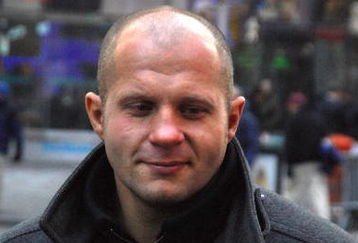

.jpg)